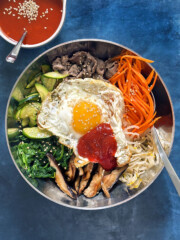
Traditional Korean Bibimbap Recipe
Loaded with colorful vegetables and mixed together with a slightly sweet, spicy gochujang-based sauce, traditional Bibimbap is the original healthy grain bowl your mind, body, and "seoul" will crave at least once a week.
Servings: 4 servings
Calories: 610kcal
Ingredients
Bibimbap Rice
- 1¼ cup short- or medium-grain rice approximately 3-4 cups cooked
Bibimbap Seasoned Meat
- 8 ounces beef ribeye sliced paper-thin across the grain
- 2 tablespoons soy sauce
- 1 tablespoon maple syrup optional for added sweetness
- 2 cloves garlic finely minced
- ½ teaspoon fresh ginger grated
- 1 tablespoon avocado oil or other neutral oil for cooking
Traditional Bibimbap Vegetables
- 2 tablespoons + 2 teaspoons avocado oil or other neutral oil for cooking
- 2 carrots julienned
- 4 cups bean sprouts
- 2 large zucchini julienned
- 10 ounces spinach
- 2 cups shiitake mushrooms
- 2½ teaspoons sea salt plus more to taste
- 4 teaspoons sesame oil
Bibimbap Sauce ~ 5 minutes
- 4 tablespoons gochujang
- 2 tablespoons rice vinegar
- 2 tablespoons toasted sesame oil
- 1 teaspoon maple syrup plus more to taste
- 1 clove garlic grated
For the Bowl
- 4 eggs
- 1½ tablespoons roasted sesame seeds
Instructions
Cook Rice ~ 45 minutes (simultaneous)
- Rinse 2 cups rice under running cold water until water runs clear, about 4 or 5 times, then steam in rice cooker as per manufacturer's instructions, or cook on stovetop.
Marinate Beef ~ 45 minutes (simultaneous)
- Combine 2 tablespoons soy sauce, optional 1 tablespoon maple syrup if using, 2 finely minced garlic cloves, and ½ teaspoon grated ginger in a medium bowl. Add sliced beef, stir until beef slices are well coated with marinade on all sides. Using your clean hands to gently massage the marinade into the meat doesn't hurt! Cover and set aside for 30-45 minutes while rice cooks and you prep the remaining vegetables.
Make Bibimbap Sauce ~ 2 minutes
- Whisk all ingredients for the bibimbap sauce together in a small bowl or jar. Use immediately and store leftovers in an airtight container in the refrigerator to use on demand.
Prepare and Cook Bibimbap Vegetables ~ 30 minutes
- Bring a large pot of water to boil.
- Drop bean sprouts into boiling water. Return water to a boil, then turn down to a simmer. Blanch the sprouts until they are just beginning to wilt, about 10 minutes. Remove the sprouts from the pot with tongs, large slotted spoon, or small sieve, leaving the simmering water in the pot. Drain off or squeeze as much water from the sprouts as possible. Toss with ½ teaspoon salt and 1 teaspoon sesame oil. Set aside.
- Repeat the same cooking method for the julienned carrots. Carrots will take about 6 minutes until tendercrisp. Toss with ½ teaspoon salt and 1 teaspoon sesame oil, and set aside.
- Repeat process for spinach, which will blanch in about 2 minutes. Toss with ½ teaspoon salt and 1 teaspoon sesame oil.
- While you're waiting for the water to boil for the bean sprouts, carrots, and spinach, heat 2 teaspoons neutral cooking oil in a large skillet over medium high heat. Add zucchini to the pan and sprinkle with ½ teaspoon salt. Sauté until just the zucchini is barely beginning to soften and most of the rendered liquid has evaporated off. Remove to a small bowl. Toss with 1 teaspoon sesame oil and set aside.
- Add 1 tablespoon oil to the pan and swirl to coat the bottom evenly. Add the sliced shiitake mushrooms, sprinkle with ½ teaspoon salt, and sauté until mushrooms have cooked through and are starting to very lightly char at the edges. Remove from pan and set aside.
- Turn down heat to medium low, add 1 tablespoon oil to the pan. Fry eggs sunny side up. (I personally cook my eggs over-hard. Sorry not sorry!)
Cook Marinated Beef ~ 5 minutes
- Wipe out the pan to remove any errant burnt or crisped veggie or egg bits. Heat 1 tablespoon oil in frying pan over medium-high heat, then add marinated beef. Sauté until just cooked through, about 5 minutes. Total cooking time depends on how thick the beef slices are. Remove cooked beef from pan and set aside on a plate to cool.
Assemble Bibimbap Bowls and Serve
- When ready to serve and eat, place 1 cup of steamed rice in the center of each serving bowl. Arrange vegetables and beef around the rice. Place the sunny side up eggs over the rice in the center. Garnish with toasted sesame seeds if using. Serve with Bibimbap Sauce on the side at the table.
when you make this recipe, let us know!Mention @TheDelicious or tag #thedeliciousmademedoit!
Notes
Store leftover Bibimbap that has already been mixed with sauce in an airtight container in the refrigerator for up to 1 day.
Store leftovers of individual vegetables and cooked beef in separate air tight containers in the refrigerator for up to 3 days.
Nutrition estimates for 1 serving include ~1½ tablespoons of Bibimbap Sauce.
Nutrition
Serving: 1serving | Calories: 610kcal | Protein: 31g | Saturated Fat: 7.5g | Fiber: 9g