
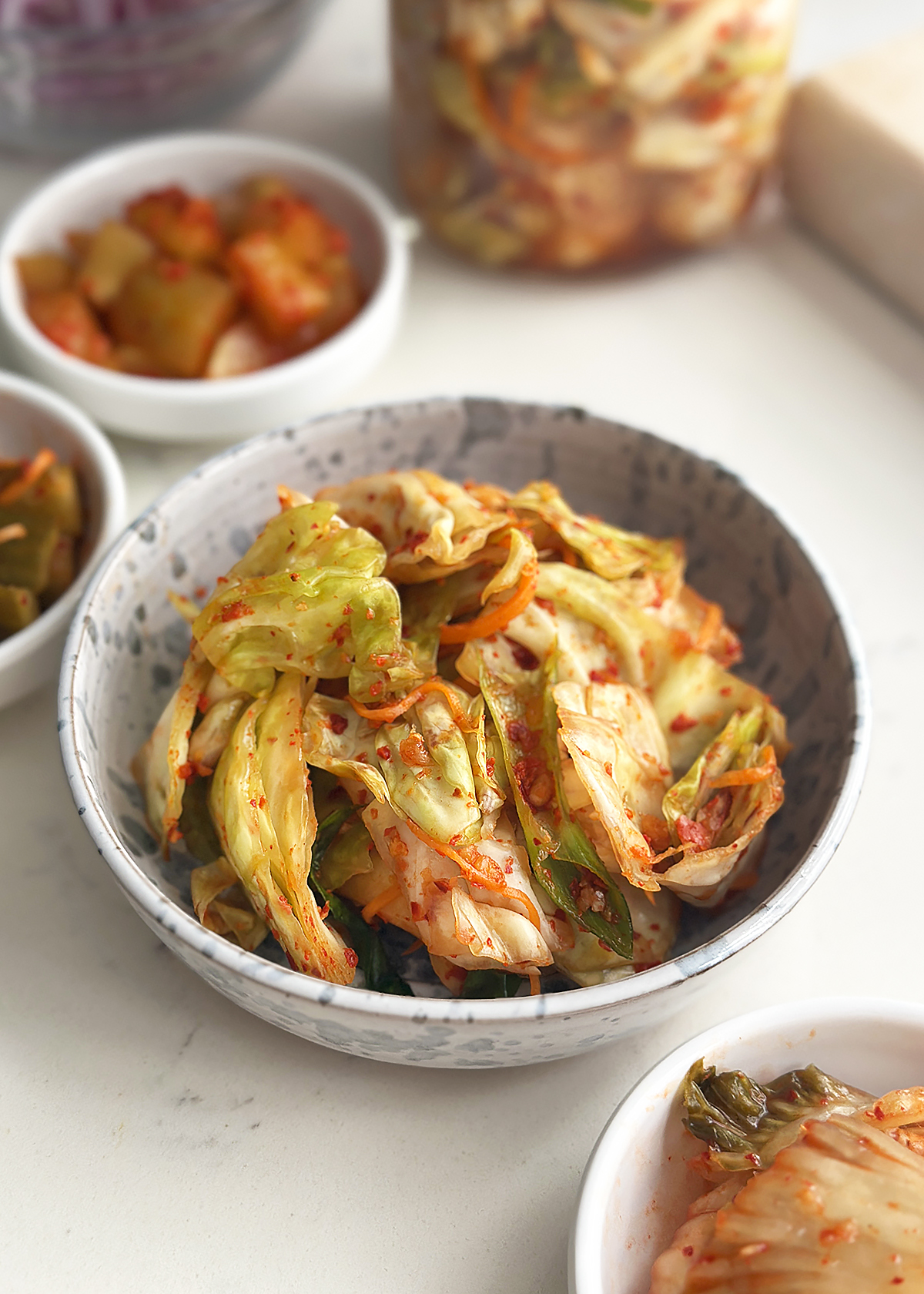
So Kimchi doesn't just have to be made from those long, oblong napa cabbages. You can and absolutely should regular ol' round Green Cabbage Kimchi aka Yang Bae-chi Kimchi 양배추 김치if you can't get your hands on napa cabbage! Shall we?
Explore More

What Ingredients You Need for Green Cabbage Kimchi
Green Cabbage Kimchi fresh/refrigerator ingredients:
- Green cabbage - 1 head, about 2 pounds
- Carrots - 1 cup julienned, about 2 carrots
- Green onions - 1 cup sliced, about 1 stalk
- Garlic - ¼ cup cloves
- Ginger - 1 teaspoon grated
Green Cabbage Kimchi dry/pantry ingredients:
- Sea salt, ½ cup
- Gochugaru, ¼ cup
- Fish sauce, 2 tablespoons
- Sugar, 1 tablespoon


Green Cabbage Kimchi, Fast and Easy Recipe
Ingredients
- ¼ cup coarse sea salt
- 4 cups water
- 1 head green cabbage about 2½ pounds
- 1 cup carrot julienned (1-2 large carrots)
- 1 cup green onions 2 inch pieces (2-3 stalks)
Seasoning
- ¼ cup gochugaru
- ¼ cup garlic cloves, finely minced
- 2 tablespoons fish sauce
- 1 tablespoon sugar
- 1 teaspoon fresh ginger
- ½ cup water
Instructions
Prep Cabbage
- Dissolve coarse sea salt in water in a bowl large enough to hold chopped cabbage.
- Remove any bruised or very wilted outer leaves from green cabbage. Split the cabbage lengthwise in half. Split each half lengthwise again into quarters in the same manner. Cut each of the cabbage quarters into 1½ to 2-inch pieces, discarding the pieces of the core.
- Place the chopped cabbage in the bowl with the salt water. Add more water until the cabbage is submerged. Place a plate on top of the cabbage to weigh the cabbage down into the water if needed, Set aside for 2 hours while you prepare the remaining ingredients, giving the cabbage a stir every 30 minutes.
- Drain salt water from cabbage, rinse a few times with fresh water, drain, squeeze out as much water as you can with your hands, then set aside.
Make Kimchi Seasoning - while cabbage is salting
- Combine gochugaru, minced garlic, grated fresh ginger, fish sauce, sugar, and clean water in small bowl. Stir until sugar mostly dissolves (it will be hard to tell because of the gochugaru).
Make Green Cabbage Kimchi
- To the drained cabbage in a large bowl, add julienned carrots and sliced green onions.
- Pour the Kimchi Seasoning over the vegetables and cabbage then stir everything to combine, massaging the seasoning mixture into the cabbage leaves to make sure they are evenly and well coated. You hands are the most efficient tool for this; wear gloves!
- Place the Green Cabbage Kimchi into large glass jars, pressing down to remove air pockets. Cover with lids.
- Store the Green Cabbage Kimchi at room temperature overnight.
- After 24 hours, tighten the lids and shake and turn the jars upside down to re-distribute the seasoning and mix with any additional water released from the cabbage. Loosen the lids a little (to let gas escape while fermenting) and transfer the jars to the refrigerator. Green Cabbage Kimchi will taste like a highly seasoned cabbage salad after the first day, and will start to taste like actual kimchi on the third day and beyond. Green Cabbage Kimchi will keep for up to two weeks.
Notes
Nutrition

What Kind of Cabbage to Use for Kimchi
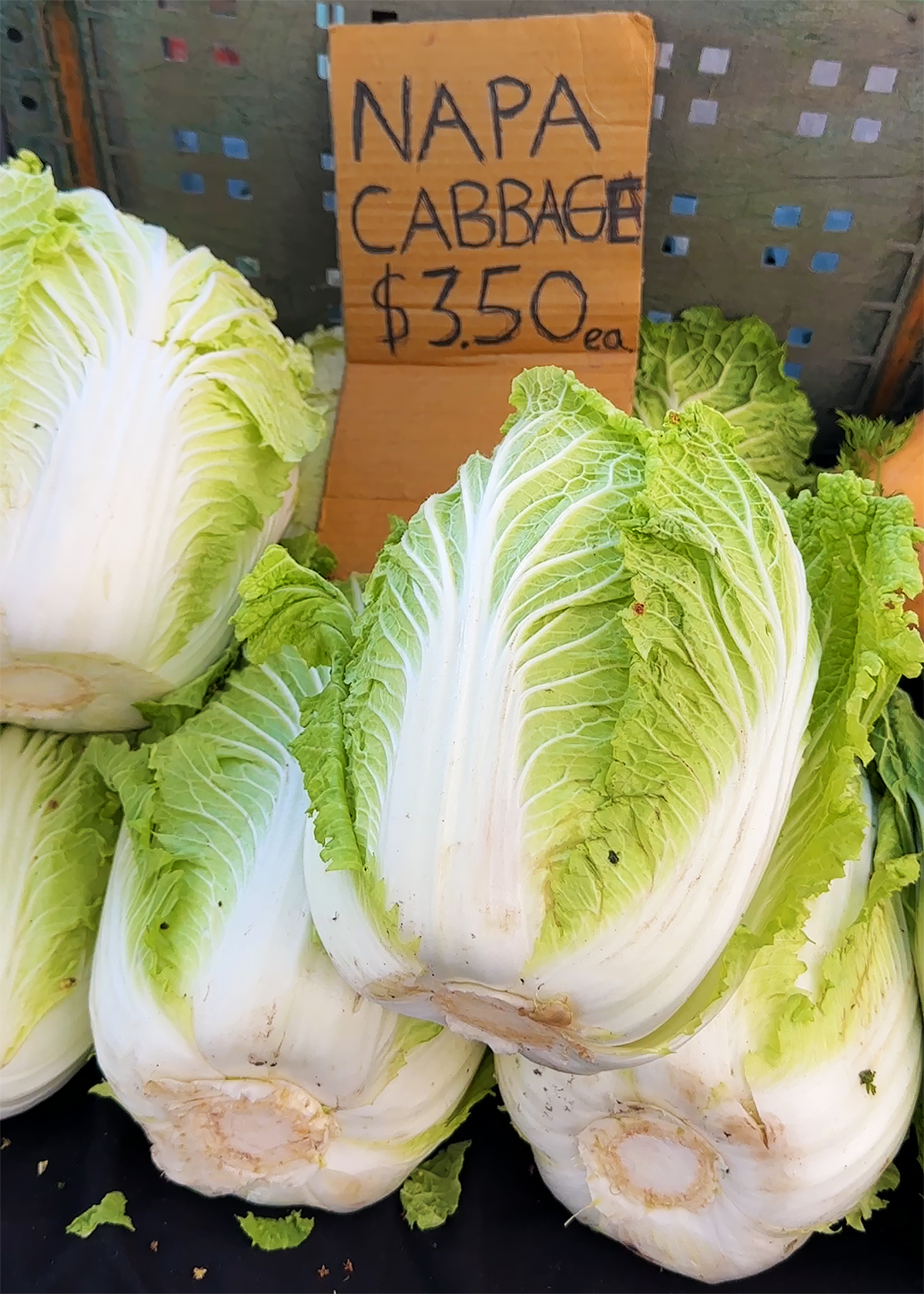
The most common kimchi you see is made with napa cabbage, the longer, oblong-shaped cabbage, but they may not always be available to you! That's why this recipe is for regular ol' round, green cabbage.
This is not a "substitute," because kimchi made with regular round green cabbage is actually a real thing called called yang-bae-chu kimchi/양배추 김치. If ever you go to a Korean-Chinese restaurant, you'll probably see it on the table as part of the banchan spread.
Is Green Cabbage Kimchi Healthy?
Yes! Green Cabbage Kimchi is super healthy! Depending on your health needs and dietary considerations, of course. To be honest, I can't really think of a case in which Green Cabbage Kimchi would not be healthy, unless maybe spice or acid from the fermentation causes heartburn or other gastric issue for you.
Dietary Considerations of Green Cabbage Kimchi
As published, this recipe for Green Cabbage Kimchi is:
- pescatarian (uses fish sauce)
- dairy-free
- gluten-free/wheat-free
- grain-free
- anti-inflammatory
This recipe for Green Cabbage Kimchi is easily vegan/vegetarian-adaptable by substituting in vegan fish sauce (usually made with mushrooms) for the regular fish sauce.

How Many Pounds is One Green Cabbage Head?
Because cabbages come in different types, sizes, and density (how tightly packed the leaves are), it's better to "measure" cabbage by actual pounds, not by number of heads.
According to the USDA, an "average" cabbage weighs between 2 and 3 pounds.
This recipe calls for one head, which equals:
- 2½ pounds, or 40 ounces, of cabbage
- about 8 cups chopped
This recipe is kimchi though, not precision baking, so it's ok to come close enough with the amounts.
Additional Ingredients Notes and Resources
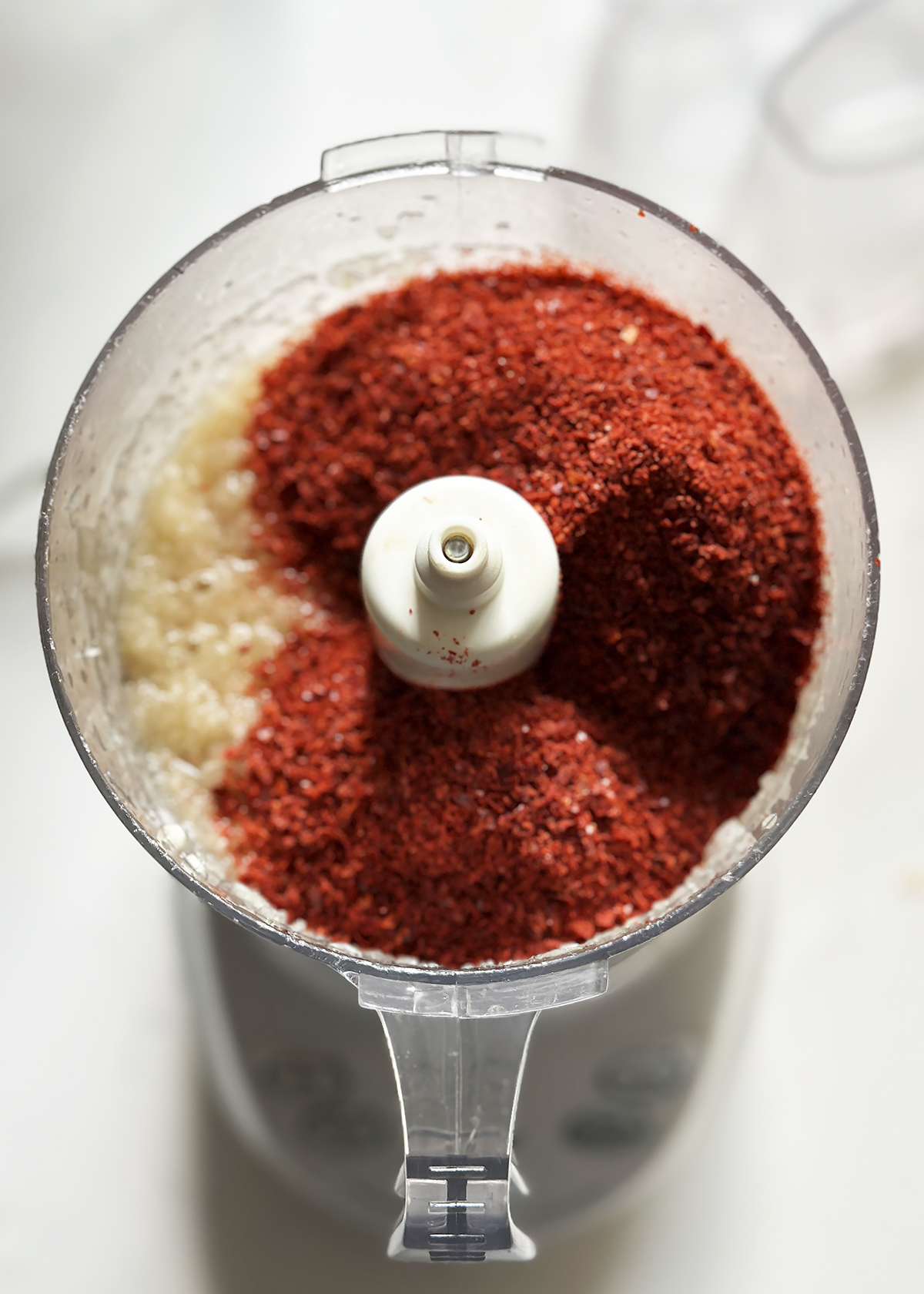
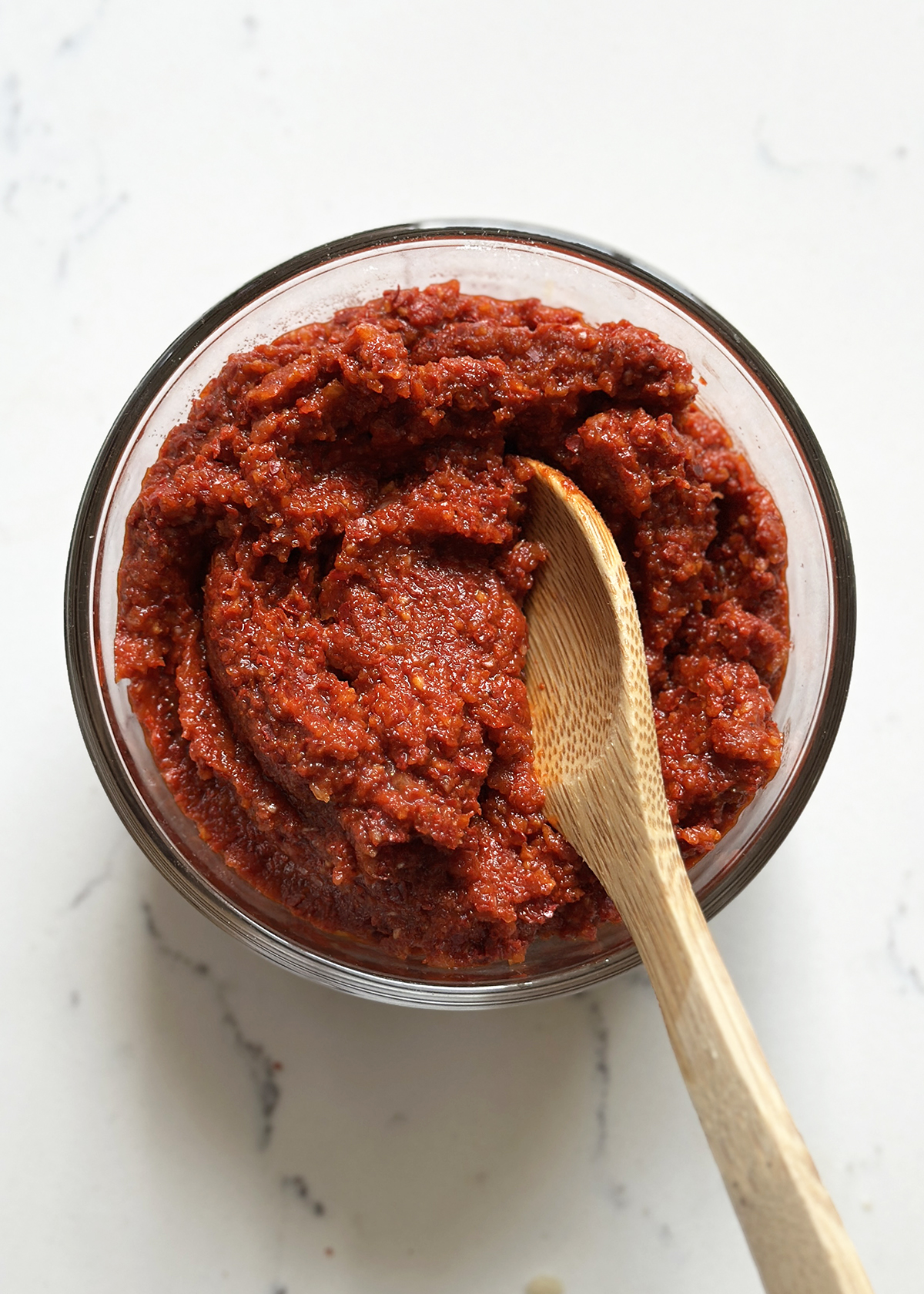
Gochugaru: Gochugaru is a bright red Korean chili pepper powder made from a specific variety of Korean chili pepper. Its heat level ranges, but gochugaru is generally considered a medium spicy chili powder. Look for gochugaru that is made from Korean peppers that are sun-dried, and for this recipe specifically, a coarse grind, or flakes, not a fine powder. You can find gochugaru in Korean grocery stores like H-Mart and other Asian grocery stores. I have also seen some independent, new-ish spice companies like this and this at Whole Foods. This organic brand and the one in the photo above, purchased at HMart, are currently what I have in my pantry.
Fish sauce: This brand has been my favorite for years available at Whole Foods if you can't get to an Asian market, and this one I've tried recently and like, too!
Garlic, Ginger, and all other fresh herbs and produce from either the Santa Monica Farmers' Market on Wednesday, or Whole Foods Market.
How to Make Green Cabbage Kimchi
Prep Cabbage
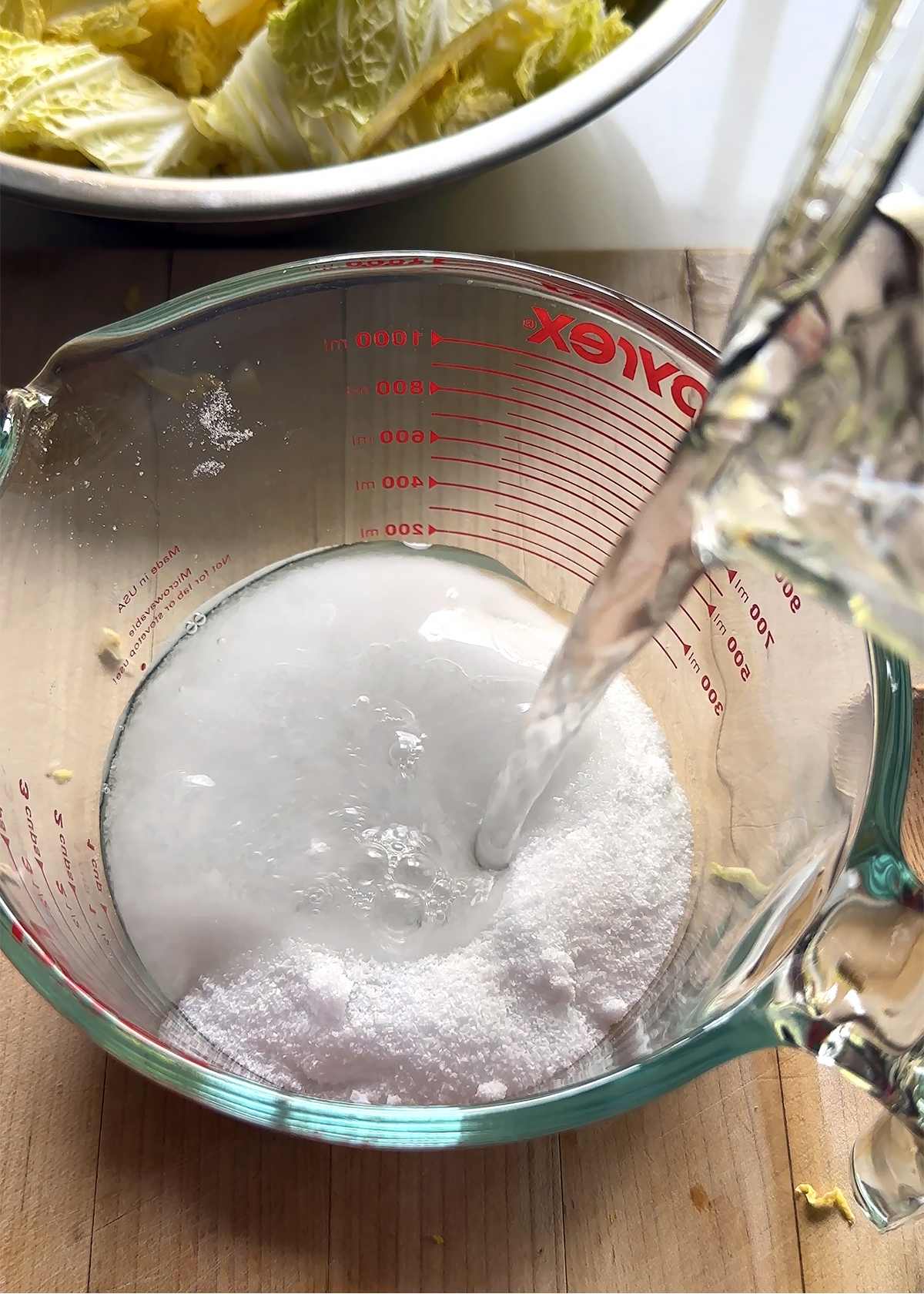
Dissolve coarse sea salt in water in a bowl large enough to hold chopped cabbage.

Remove any bruised or very wilted outer leaves from green cabbage. Split the cabbage lengthwise in half. Split each half lengthwise again into quarters in the same manner. Cut each of the cabbage quarters into 1½ to 2-inch pieces, discarding the pieces of the core.

Place the chopped cabbage in the bowl with the salt water. Add more water until the cabbage is submerged.

Place a plate on top of the cabbage to weigh the cabbage down into the water if needed. Set aside for 2 hours while you prepare the remaining ingredients, giving the cabbage a stir every 30 minutes.
Prep Kimchi Seasoning and Make Kimchi

Combine gochugaru, minced garlic, grated fresh ginger, fish sauce, sugar, and clean water in small bowl. Stir until sugar mostly dissolves (it will be hard to tell because of the gochugaru).

Drain salt water from cabbage, rinse a few times with fresh water, drain, squeeze out as much water as you can with your hands, then set aside.
Make Homemade Kimchi

To the drained cabbage in a large bowl, add julienned carrots and sliced green onions.

Pour the Kimchi Seasoning over the vegetables and cabbage then stir everything to combine, massaging the seasoning mixture into the cabbage leaves to make sure they are evenly and well coated. Your hands are the most efficient tool for this; wear gloves!

Place the Green Cabbage Kimchi into large glass jars, pressing down to remove air pockets. Cover with lids.
Store the Green Cabbage Kimchi at room temperature overnight.
After 24 hours, tighten the lids and shake and turn the jars upside down to re-distribute the seasoning and mix with any additional water released from the cabbage. Loosen the lids a little (to let gas escape while fermenting) and transfer the jars to the refrigerator.

Pro Tips, Tricks, and Techniques
Use your hands!
Wear dark clothes or an apron.
Tools and Equipment

There isn't any special tool or piece of equipment that is absolutely required for this Green Cabbage Kimchi. You can make it using a sharp chef's knife on a sturdy cutting board to prep the cabbage and vegetables! However, that isn't to say there are a few tools that might make it slightly easier to get from napa cabbage on your counter to jar in the fridge!
- Chef's knife, my personal workhorse
- Wooden cutting board, oversized for all those carrots
- Glass mixing bowls
- Mini ¼-cup liquid measuring cup
- Glass storage container with airtight lids, perfect size for storing Spicy Carrots you make it in advance
- Glass mason jars, wide mouth because they're easier to use and wash
- Mason jar lids that are better than those horrible 2-piece metal lids
Best Spicy Banchan and Korean-ish Side Dishes

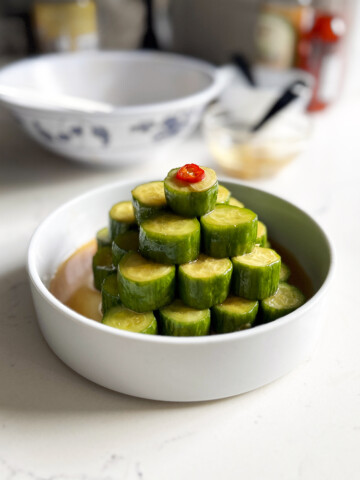
- Oi Muchim, Korean Spicy Cucumbers
- Spicy Korean Radish Salad, Mu-saeng-chae
- Radish Kimchi, Kkak-du-gi
- Korean Carrot Salad, a carrot banchan
Korean Vegetable Side Dishes


- Din Tai Fung Spicy Cucumbers copycat, similar but different
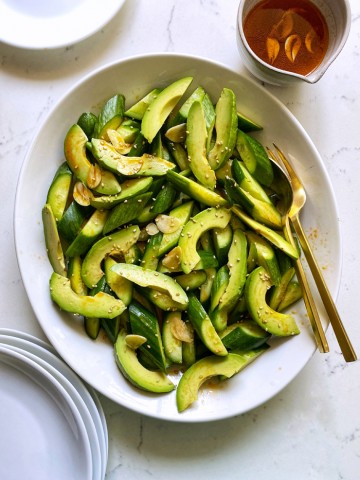
- Spicy Cucumber and Avocado Salad
- Garlicky Spinach, Shigeumchi Namul
- Soy Sauce Pickles
Food for Afterthoughts
I knew that at some point - despite my broad, flat mongoloid forehead, cosmetically enhanced features and pale, pasty yellow-tinged complexion, despite my perfectly practiced pronunciation when I recite from memory the few phrases I know in the language, despite gross accessorization of nearly every meal with some condiment form of firrhea-inducing heat, despite every supercutaneous thing about me that gives off the impression that I might be Korean - at some point, it would be revealed that I am indeed, not really Korean.
Because no person worth half her weight in galbee could rightfully claim to be Korean and go out for Korean BBQ for dduk bo ssam for the first time at the ripe old age of noneofyourbusiness.
I didn't know what dduk bo ssam was until we headed toward the restaurant and my brother-in-law gushed about the paper-thin slices of dduk used to wrap grilled meat and vegetables. The concept of wrapping is not foreign to me. I have been grilling galbee, bulgogi, and other Korean marinated meats and naturally wrapping them with an obscene smear of red pepper sauce in leaves of lettuce since forever ago. I even have vague memories of reading about dduk bo ssam in reviews from, not surprisingly, J Gold, but I had never eaten it.
Shameful. I should be spanked with metal studded chopsticks dipped in fermented soybean paste.
Grills Gone Wild
Quite honestly, I have never, in my life, understood the appeal of cooking at the table. Do we grill it ourselves? If we do, then why the hell did we go out to eat in a restaurant if we have to cook it?!?! For me, service is the point of eating out. However, the server will snatches up the tongs and absent-mindedly flips a few pieces of meat before running off at the behest of the next table full of red-faced old men in golf gear. It's annoying and mildly confusing. Of course, I never use this argument when enjoying shabu shabu.
Only rookies, like myself eat the meat straight off the grill. Professionals wrap a piece of grilled meat in a single thin, square dduk wrappers along with whatever else you think your mouth can politely manage, including, but not limited to, steamed rice, any of still remaining banchan, sahm-jjang, salad, grilled vegetables, and if you're a real man, raw garlic and sliced jalapenos.
Wrapping with the dduk is a bit of an art, and a little different from wrapping with the lettuce leaf, which absolutely requires some actual hand touchage. If you're an expert, you can wrap with dduk bo ssam by collecting everything into a neat little pile on your plate, then enveloping everything with the wrapper with your chopsticks. I can do it. For though this was my virgin voyage on the dduk bo ssam cruise around the grill, that's just how superexpertastic I am with chopsticks. I did it only once though, because I don't really like eating everything wrapped up in the dduk.
*dduks for cover** (Oh god, did I? Did I just blog that? I did. Gross.)
We Have the Meats
Yes, I know. First, I've never eaten dduk bo ssam, and now I don't even like it? What the hell kind of Korean am I?
I'll tell you what kind.
The nastiest, trashiest, dirtiest, filthiest spicewhore of delicious Korean possible.
I pass on most of the cha-dol-bae-gi and instead snapped as many pieces of the thicker, fattier galbee meat from the grill as I could with my lightning, Karate Kid dexterity on chopsticks. I topped each piece with a clove of raw garlic and sliced jalapeno, smothered it in the "ksalsa" before wrapping it up, not in the dduk, but in a slice of kimchee. Like the girly man that I am, I swallowed the entire filthy, fiery fermented thing, as obscenely dripacious with glistening grill grease and faintly bloody meat juices, whole. I had to ask for refills on the ksalsa at least three times, and that was only after I had shot my way through everyone else's condiment trays at the table.
Boneless and bite-sized galbee grilled at the table is great for the unholy condiment crimes I committed on it, but it seems to miss the point. Galbee is shortribs, and the only real reason I ever order it is to hold it in my bare hands and tear the flesh away from the bones with my teeth like a savage.
Regular Ribs
We made an order of the regular galbee cooked in the kitchen, but even still, it irritates me when galbee is made "convenient" with the cross-cut shortribs - pieces that have two or three tiny bone cross-sections across the "top." I love, and miss, the old school galbee that's prepared from the bones that are left intact. The meat is always slightly more raw closer to the bone, and I love ripping the bloody, fibrous mess away along with the chewy periosteum. Yes, you heard me. Periosteum. I'm not the Captain's daughter for nothing.
Sweet or Savory Endings
For some reason, Korean people get their chopsticks all tangled up over noo-roong-jee. I suspect that normal people would chisel the burnt, crusted residue away from the bottom of the rice pot and toss it into the garbage bowl (oh God! there she is again!) as the last step before letting the pot soak in nuclear solvent to clean it. Korean people pour boiling water into the rice pot, let it steep, and then eat the "soup" as one of the final courses in a meal. It's almost like shik-hae, the sweet, lightly spiced rice punch served as dessert. Both are a dingy gray colored liquid with pieces of cooked rice floating in it that looks like nothing but the dirty dishwater that remains after cleaning a rice cooker. It makes me shudder.
But hey, if you like the stuff, more power to you!
I prefer ending my meal with a few brothy sips of jjigae that comes to the table still boiling in its tiny cauldron. Shik Do Rak serves daen-jahng jji-gae, a spicy fermented soybean paste-based broth that is slightly less viscous than lava, but no less volcanically hot. Every sip melts a hole straight through to the base of your nasal cavity through the roof of your mouth, and subsequently sends your chest into a series of intermittent implosions as the molten magma makes it peristaltic way down your esophagus.
Sure beats apple pie a la mode for dessert, doesn't it?
Jerrold says
Korean food porn - "spanked with metal studded chopsticks dipped in goh-choo-jahng."
The dduk is great on its own. The owner is really nice, even if you're not Korean or if you're Korean and don't speak it very well or if you're Korean, don't speak the language very well and bring a non-Korean in for a date.
david hong says
Shik Do Rak has great bbq, and the food is very good flavors. I agree the owner is very kind.
The lunch specials are good, and the classic fermented bean paste stew is very flavorful. They also have a mean monk fish and bean sprout dry stew -- this is very large, and can feed 3-4 people easily. They have two sections - interior with mirrored walls and a covered upper/outer section to deal with all the smoke from the bbq. Tough on parking, but you can usually park on Olympic after 7 pm.
david hong says
Shik Do Rak has great bbq, and the food is very good flavors. I agree the owner is very kind.
The lunch specials are good, and the classic fermented bean paste stew is very flavorful. They also have a mean monk fish and bean sprout dry stew -- this is very large, and can feed 3-4 people easily. They have two sections - interior with mirrored walls and a covered upper/outer section to deal with all the smoke from the bbq. Tough on parking, but you can usually park on Olympic after 7 pm.
hermz says
Yeah, people seem to go nuts for the dduk bo ssam. I think it's aiiight... something different.
Charlotte says
The Shikdorak in LA is missing one key ingredient that is available at the original Shikdorak, in Garden Grove - pickled radsih, tinged green with a hint of wasabi, sliced thin and layered between the dduk and whatever you're wrapping. The sharp taste of the mooh totally transforms dduk bo sam, and I don't see the point of wrapping your meat in dduk without it! I'm so sorry that you missed it, but I think other dduk bo sam places have it now, so you should ask around.
George C says
Good to see you're writing about Korean food again. I was 30 (did I beat you there?) when I first when to The Shik - a good friend introduced me to the place. Corner Place and their fabulous dong chi mi gook soo next!