
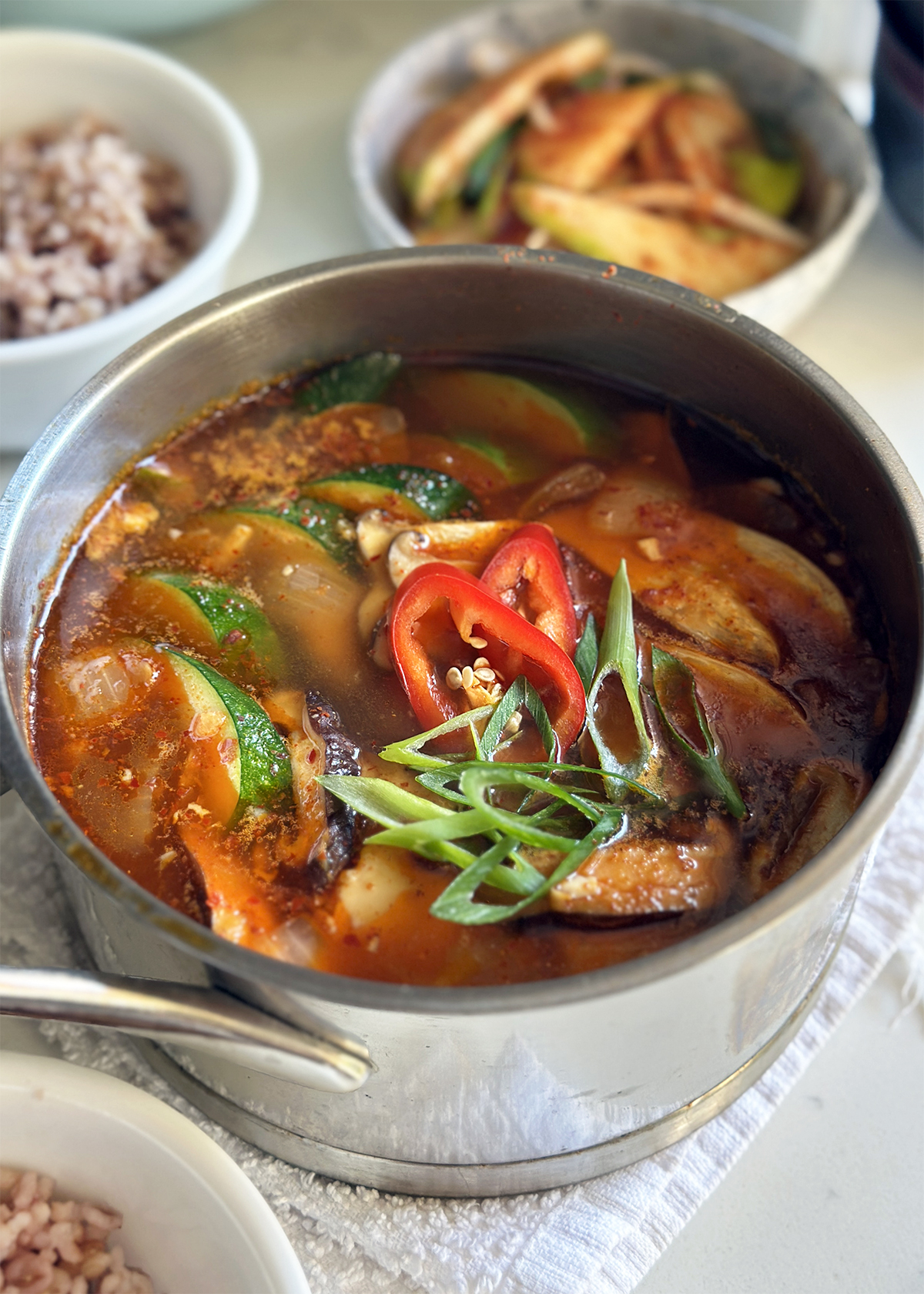
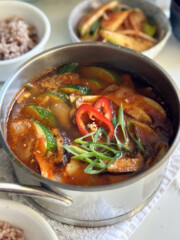
That bubbling stone cauldron full of vegetables and soft, silky tofu in rich, red hot spicy broth that often comes to the table alongside Korean BBQ? That's Soon Dooboo Jjigae (순두부 찌개) and you can very easily make it at home by throwing a bunch of deliciously umami ingredients into a pot then simmering on the stovetop for a few minutes! Shall we?
post updated October 2026, originally published February 2007
Explore More
- What is Soon Doo-boo Jji-gae 순두부 찌개?
- Ingredients You Need for Soon Dooboo Jjigae
- What Kind of Tofu Do You Use for Soon Dooboo Jjigae?
- Instructions for How to Make Soon Tofu Jjigae
- How to Eat Soon Dooboo Jjigae
- How to Store Prepped or Leftover Soon Dooboo Jjigae
- Soon Doo-boo Jji-gae aka Korean Spicy Silken Tofu Hot Pot
What is Soon Doo-boo Jji-gae 순두부 찌개?
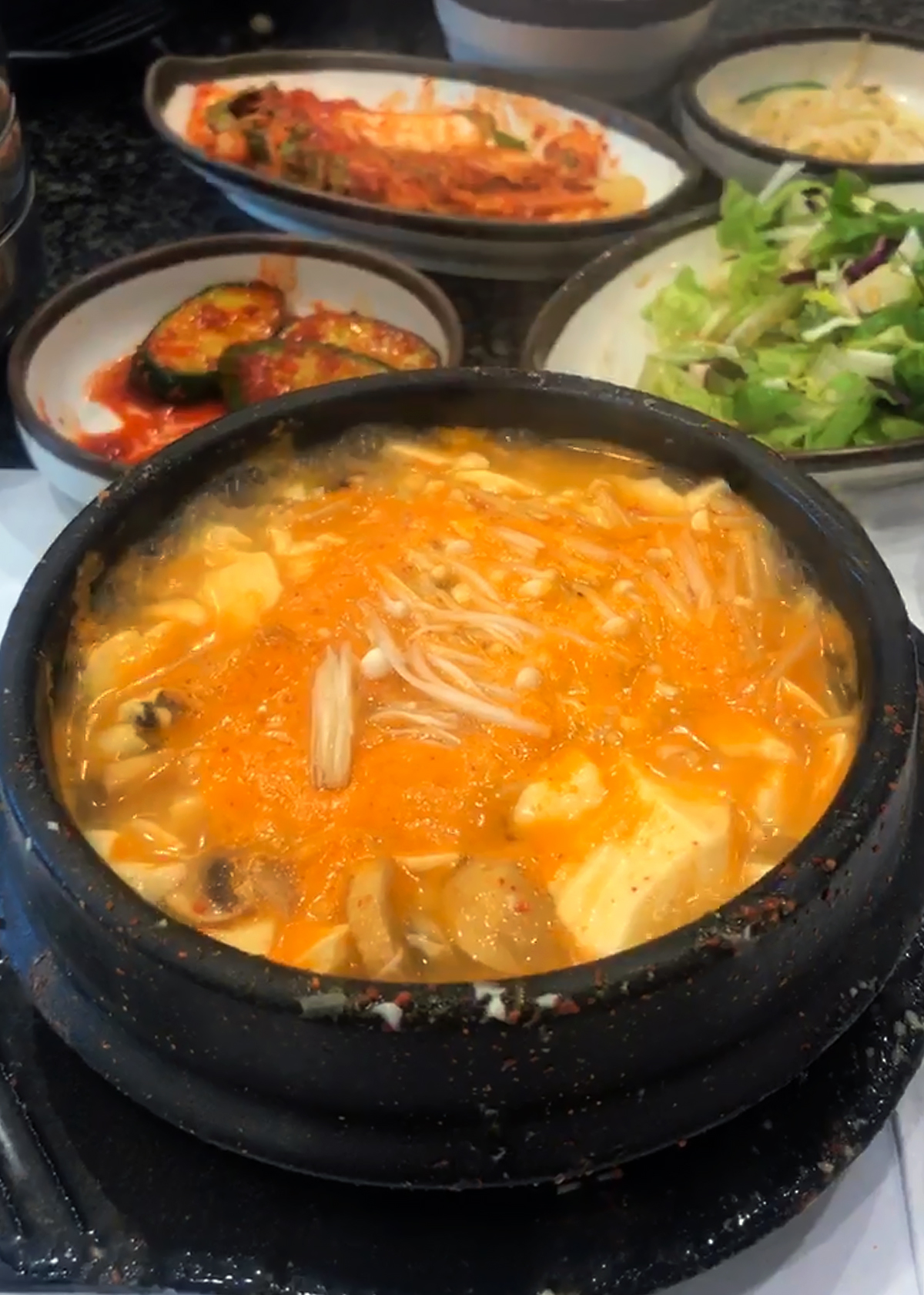
Soon Doo-boo Jji-gae is a spicy, deeply flavorful soup-slash-stew made with very soft silken tofu in a spicy, umami-rich broth. Usually in a restaurant, Soon Dooboo Jjigae comes to the table straight from the stovetop still boiling and bubbling in a special Korean ceramic pot called a ttook-baegi (뚝배기). Because the stew is still boiling, you can crack a fresh egg directly into the pot right at the table.
At home, you don't have to use the ceramic ttook-baegi. You can serve Soon Dooboo Jjigae similarly in a small 6-inch diameter pot.
The stew often includes sliced beef or pork to make it a heartier dish for a full meal. This recipe, and my personal preference, is to skip the meat since there's already protein in the form of tofu and eggs, and add a ton of mushrooms for umami.
Is Korean Jjigae a Soup or a Stew?
All the dishes mentioned, Jjigae, Gook, and Tang, are types of broth-based Korean soups and stews. The differentiating factors are usually preparation methods, how brothy the base is, and the way the dish is served and eaten.
Jjigae is commonly referred to as a "stew" in English. The broth base is slightly thicker and saltier than a classic soup. Traditionally, jjigae is cooked in an earthenware pot and served in the same pot at the table. Everyone at the table shares the jjigae. Well-known jjigaes include: Kimchi Jjigae, Soon Tofu Jjigae (silken tofu), Doen-jang Jjigae (soybean paste), and Budae Jjigae (Korean "Army Base" stew).
Guk and Tang both refer to brothy soups. The differences between the two types of soup are almost too subtle to be described.
- Tteok-guk Korean rice cake soup
- Mandoo Guk, Korean dumpling soup
- Dak Gom Tang, Korean Chicken Soup
- Mu Guk, light, brothy Korean radish soup
- Galbi Tang, Korean short rib soup
Ingredients You Need for Soon Dooboo Jjigae
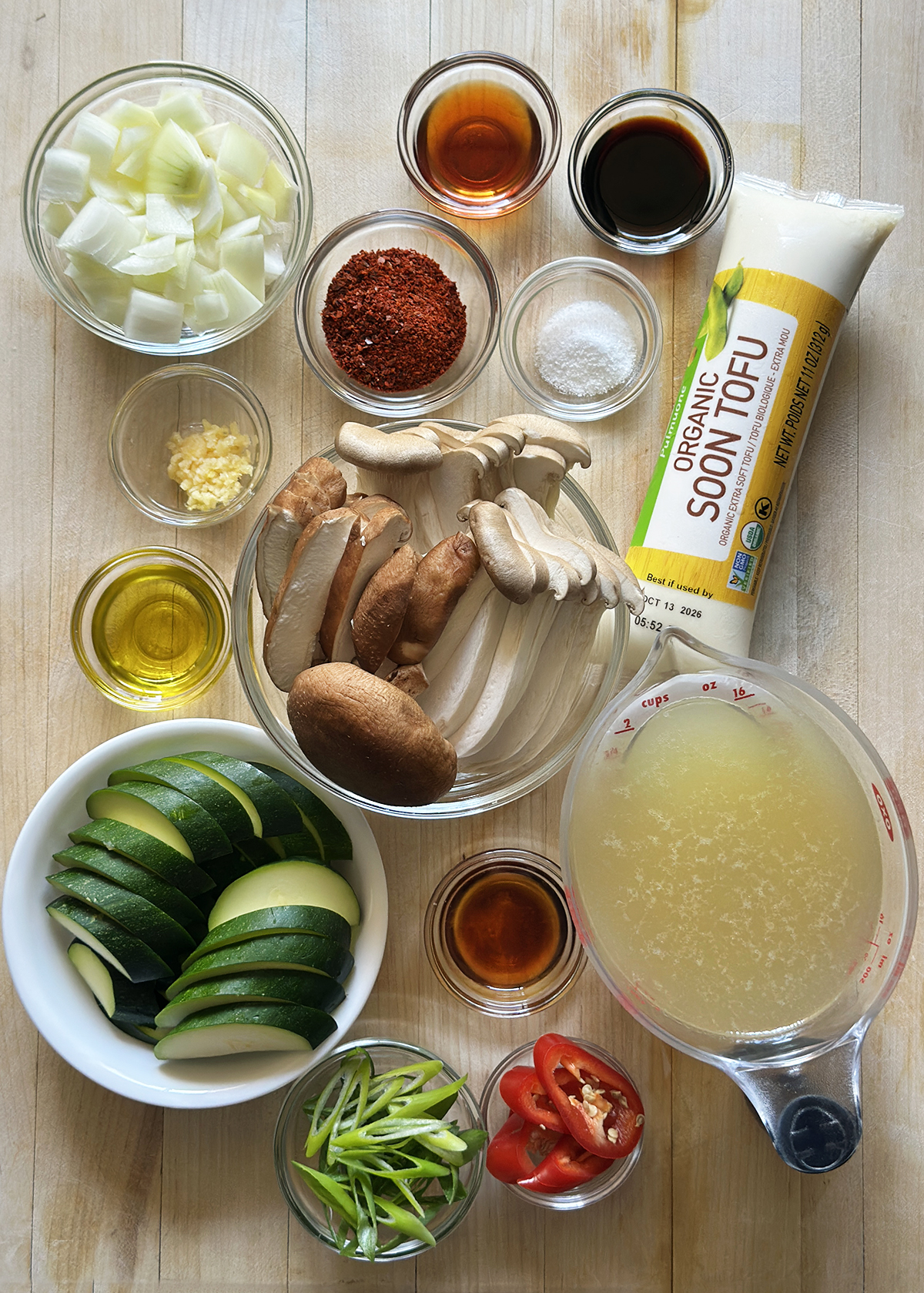
Fresh/refrigerator ingredients:
- Onion, ½ yellow or white, chopped
- Garlic, 2 cloves finely minced
- Green onion, 1 stalk thinly sliced on a deep bias
- Jalapeño pepper or serrano pepper, 2-4 slices or for more spicy, optional
- Shiitake mushrooms, 2 ounces sliced
- King oyster mushrooms, 2 ounces sliced
- Zucchini, 1 medium cut into ½-inch slices
- Soft silken tofu, 1 package 11- or 12-ounce package
- Eggs, 2 large
Dry/pantry ingredients:
- Avocado oil or other neutral cooking oil, 1 tablespoon
- 2 tablespoons gochugaru Korean chili powder
- 1 tablespoon soy sauce
- 1 teaspoon fish sauce
- Broth or stock, mushroom, rich vegetable, or anchovy kelp, 2 cups
- coarse sea salt as needed for taste
- fresh cracked black pepper optional
- 2 teaspoons toasted sesame oil
The beauty of Soon Dooboo Jjigae is that once you get the spicy base broth down, you can customize your pot by adding protein and adding any other vegetable to the dish. Hearty root vegetables like potatoes, Korean or daikon radish, and shiitake mushrooms are my personal favorites. But I have made this dish many times even with not-so-obvious for stew vegetables like butternut squash, broccolini, kale, spinach, and baby bok choy.
What Kind of Tofu Do You Use for Soon Dooboo Jjigae?
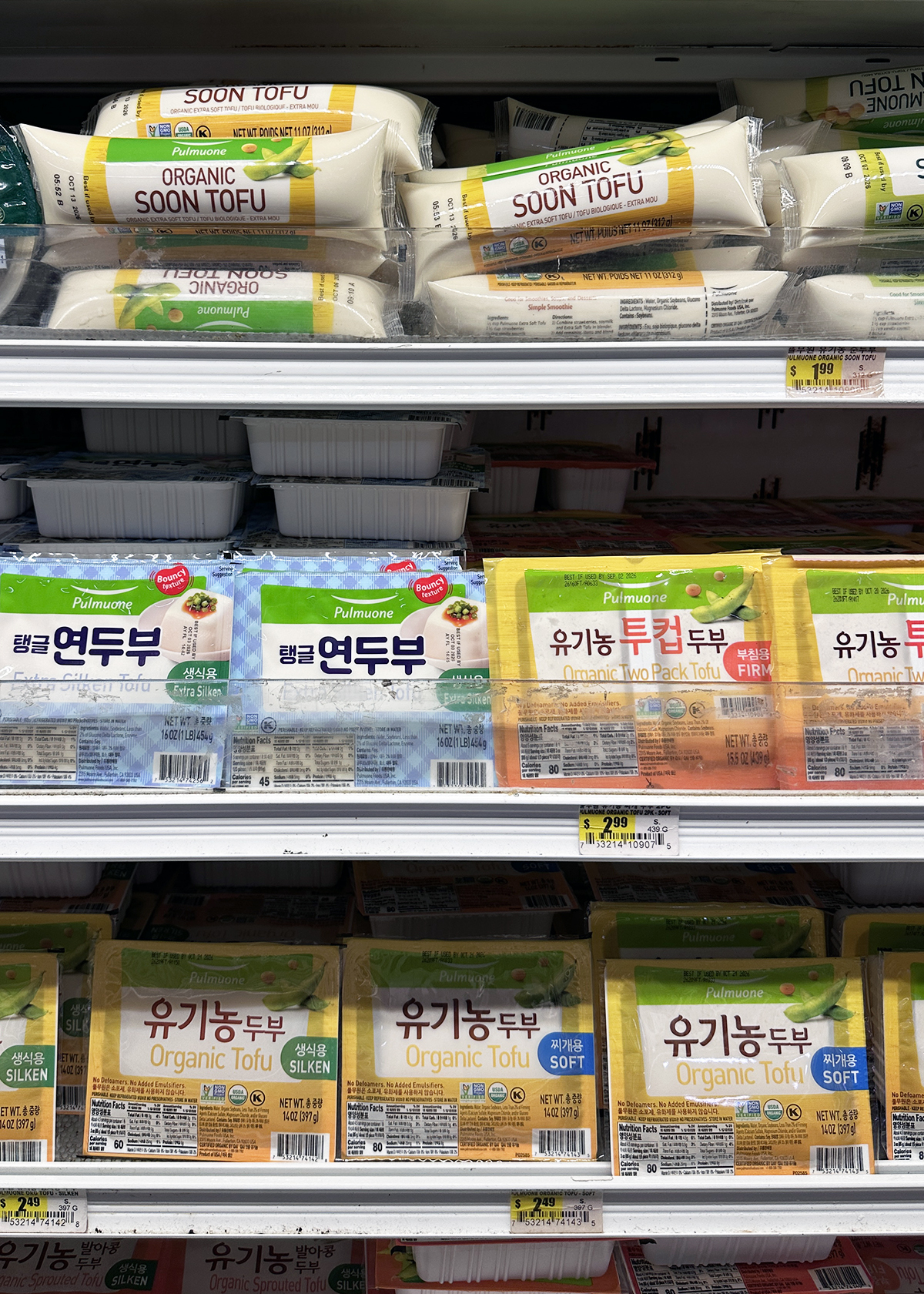
tl;dr Use soft silken tofu, or if you're at an Asian marmet with a wide selection, labeled "soon tofu." You can find in refrigerated sections of grocery stores in plastic containers, or in plastic tubes. If you cannot find tofu that's specifically labeled "silken," you can use any tofu called soft or extra soft.
Is Silken Tofu the Same as Soft Tofu?
Silken Tofu and Soft Tofu are two different types of tofu.
Though silken tofu and soft tofu are both softer textured tofus, there are slight differences in texture that arise from how they are made.
"Soft tofu" usually refers to a level of firmness on those blocks of tofu that most people are familiar with. Block tofu is made from curdled soy milk that is then pressed to remove water and shaped into blocks that range in firmness based on how long they are pressed. Block tofu is sold in those familiar rectangular hard plastic containers with a sheet of plastic on top that you can peel off. They range in firmness from "soft" which you might see in dishes like mapo tofu, to "extra firm" which hold their shape when you cut them and stir-fry or grill.
Silken tofu, on the other hand, is actually a different type of tofu that is NOT curdled and NOT pressed so the texture is always very smooth. Silkten tofu can also range in firmness, from extra silken to extra firm, but even the firmest of silken tofus retain the same smooth, silky texture that's almost like a custard.
For this Soon DooBoo Jjigae recipe, use silken tofu for the smoothest texture, but if you cannot find silken tofu, you can use soft or extra soft regular which will still be delicious in the spicy, brothy, stew base!
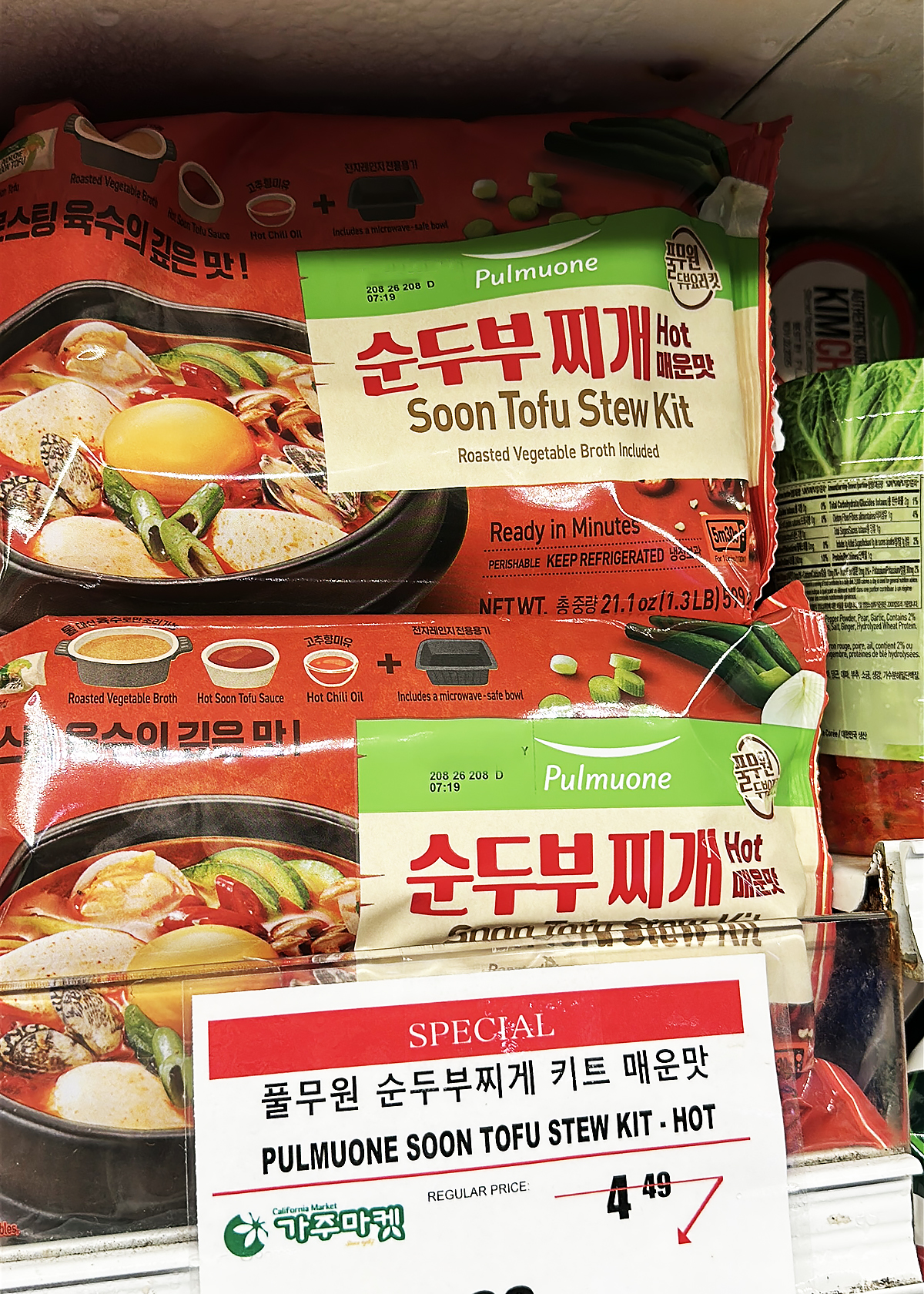
Side Note re: "Instant" Soon Tofu Kits
You might see packages labeled "Soon Tofu Kit" (as pictured above) or something similar on the same grocery refrigerator shelves as plackages of tofu. These have silken tofu as well as all the seasonings and broth ready-made for you to put together at home, similar to instant ramen packages. Skip these. These pre-packaged kits are ok when you're in a real time crunch, but let's make your own as much from scracth as possible!
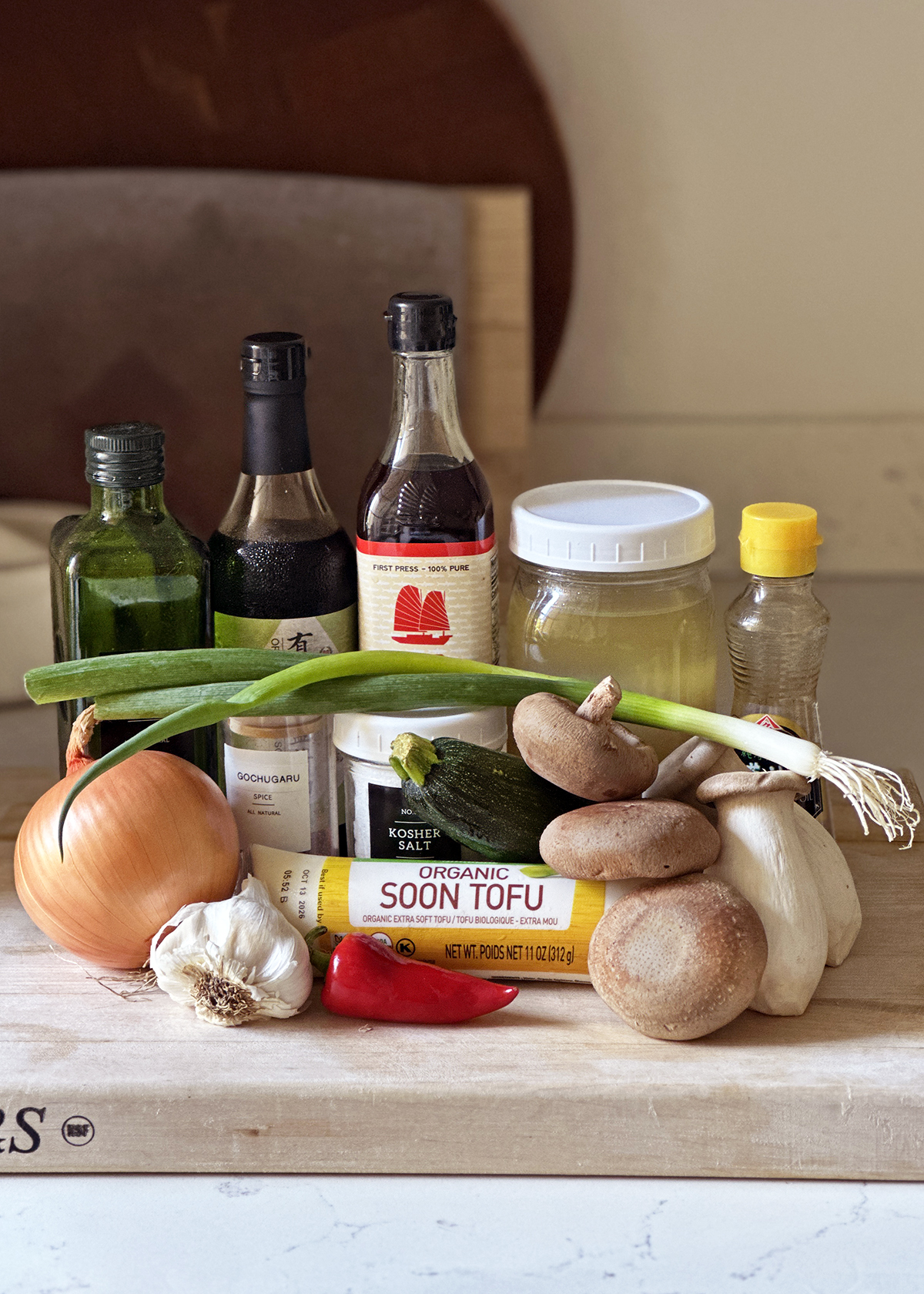
Additional Ingredients Notes and Resources
Broth or Stock. I will always recommend that you make your own bone broth, but like the Barefoot Contessa says, store-bought is fine. Read the ingredients list and get one with chicken as the first ingredient, and without added sugar or preferably without salt. I use mushroom stock.
Sesame oil. Use toasted, not regular, sesame oil. Toasted sesame oil is dark brown and is used as a finishing oil, not as a cooking oil. This is the Japanese brand that everyone and their mothers' have been using for years. You can find organic like this one in natural and higher end grocery stores.
Toasted Sesame Seeds add texture and a layer of umami. Make sure the seeds are toasted, otherwise toss them in a hot, dry skillet over medium heat for about 90 seconds or until they are fragrant.
Instructions for How to Make Soon Tofu Jjigae
Soon Tofu Jjigae is fairly straight-forward to make. You literally put everything in a large pot, bring to boil, then simmer for until the vegetables are cooked through.
If you haven't already, prep all the vegetables and tofu: cut onions into large dice, mince or grate garlic, slice zucchini into ¼-inch wide half moons or cubes, and slice fresh mushrooms.
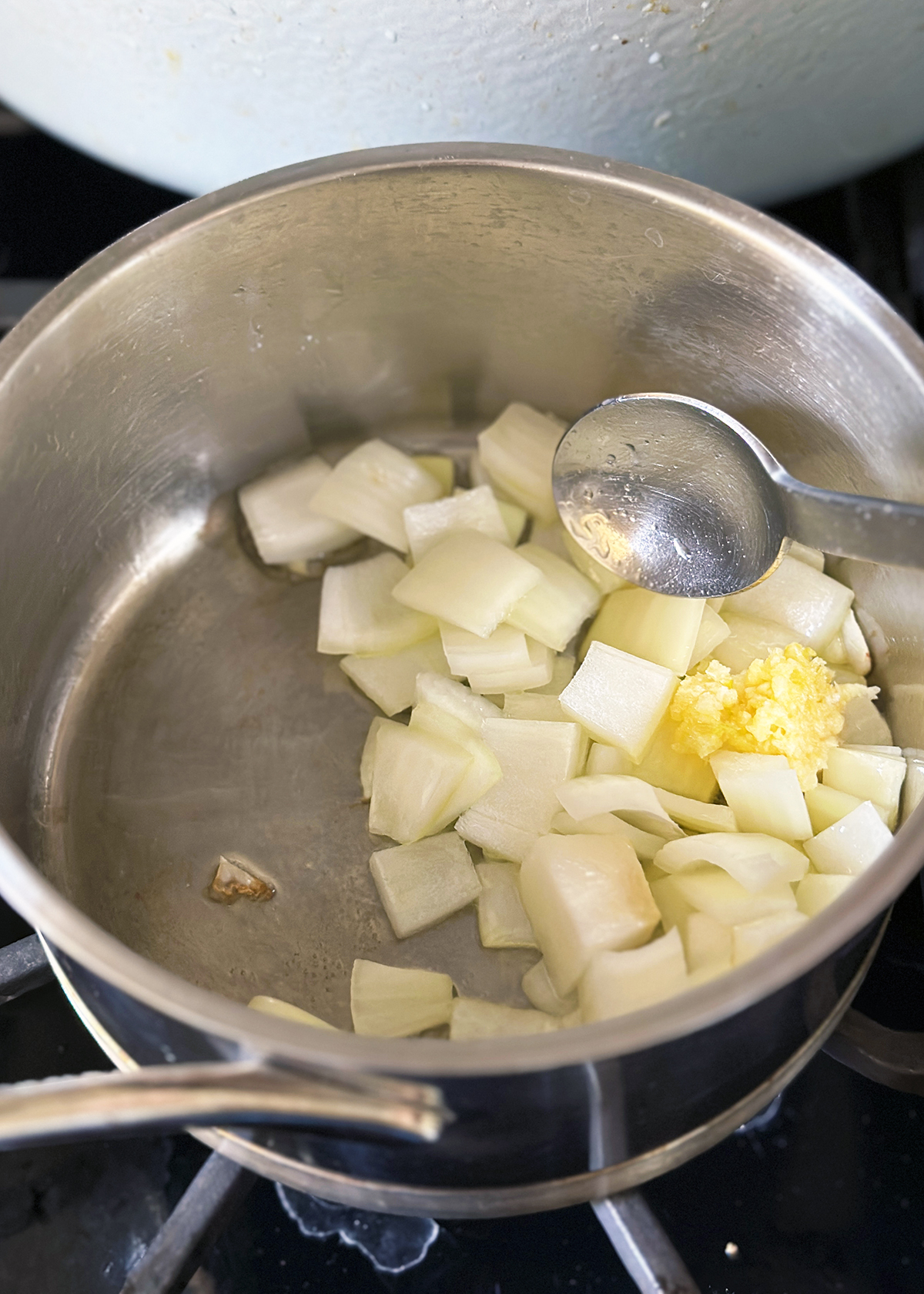
Heat 1 tablespoon avocado oil or other neutral cooking oil in a pot over medium high heat. Add ½ yellow or white onion and 2 cloves garlic and cook until onions begin to turn translucent and garlic becomes fragrant, about 3 minutes.
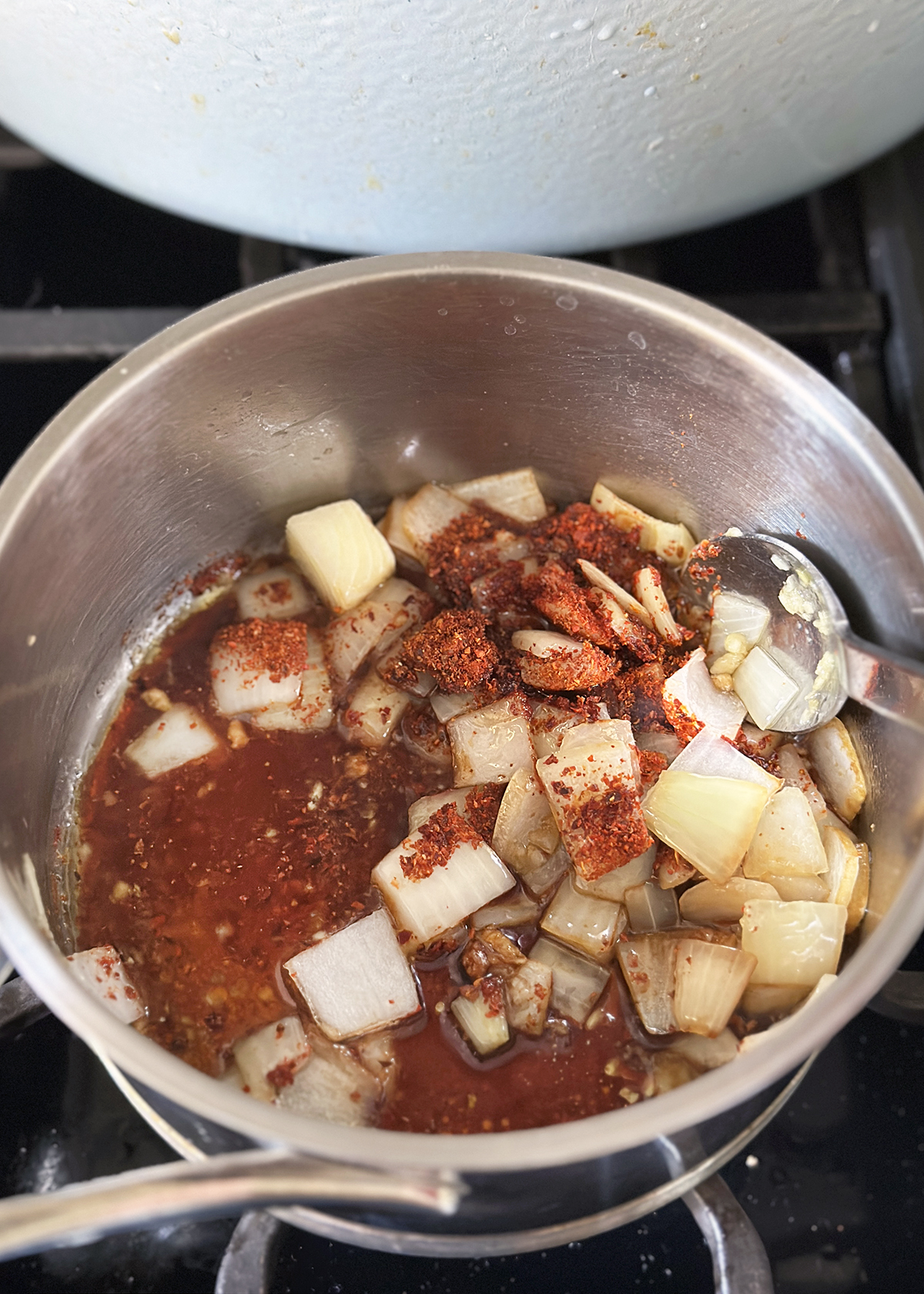
Add 2 tablespoons gochugaru, 1 tablespoon soy sauce, and 1 teaspoon fish sauce if using, and stir to combine and lightly toast the gochugaru, about 1 minute.
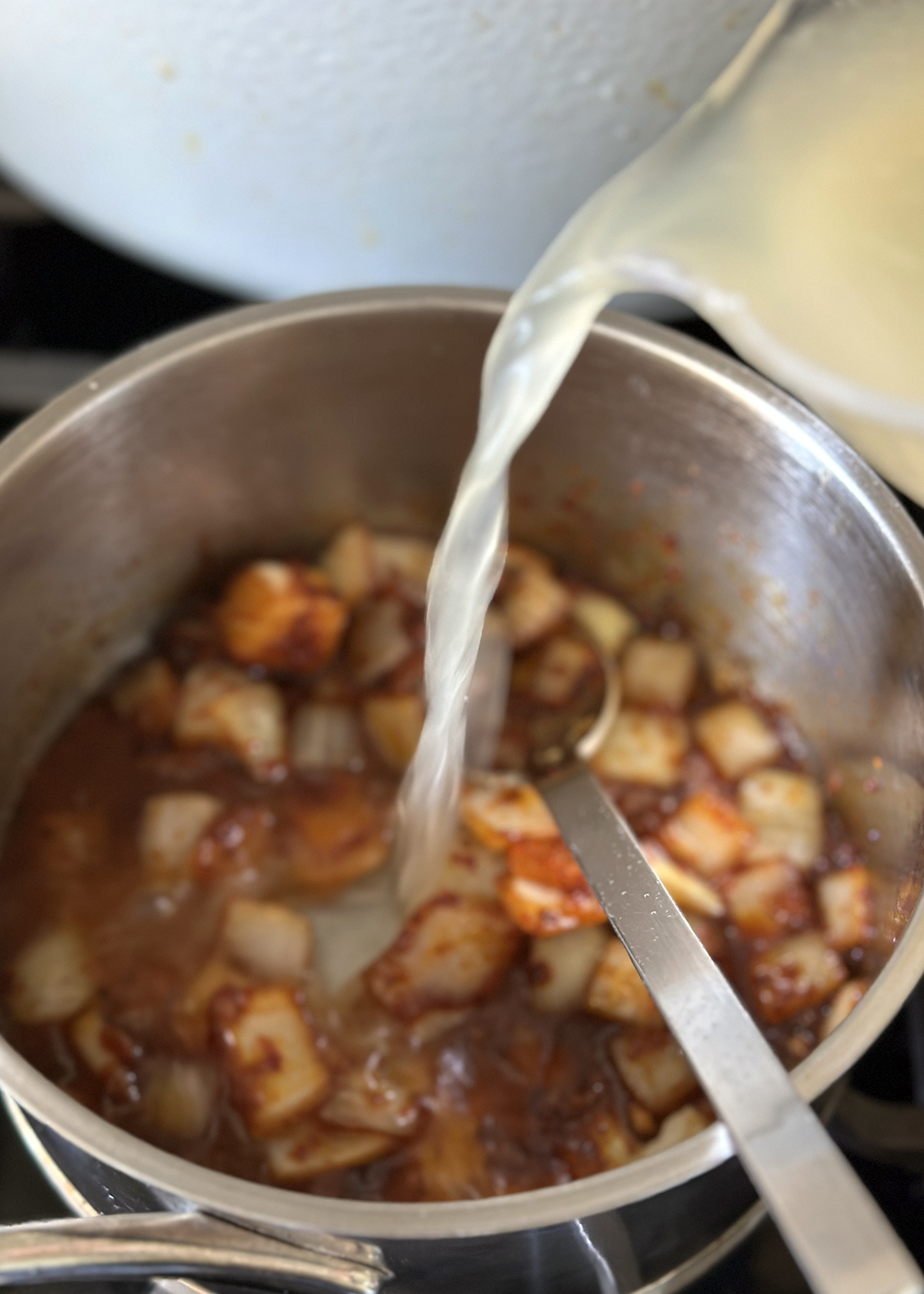
Pour in 2 cups broth or stock, turn up heat and bring to a boil.
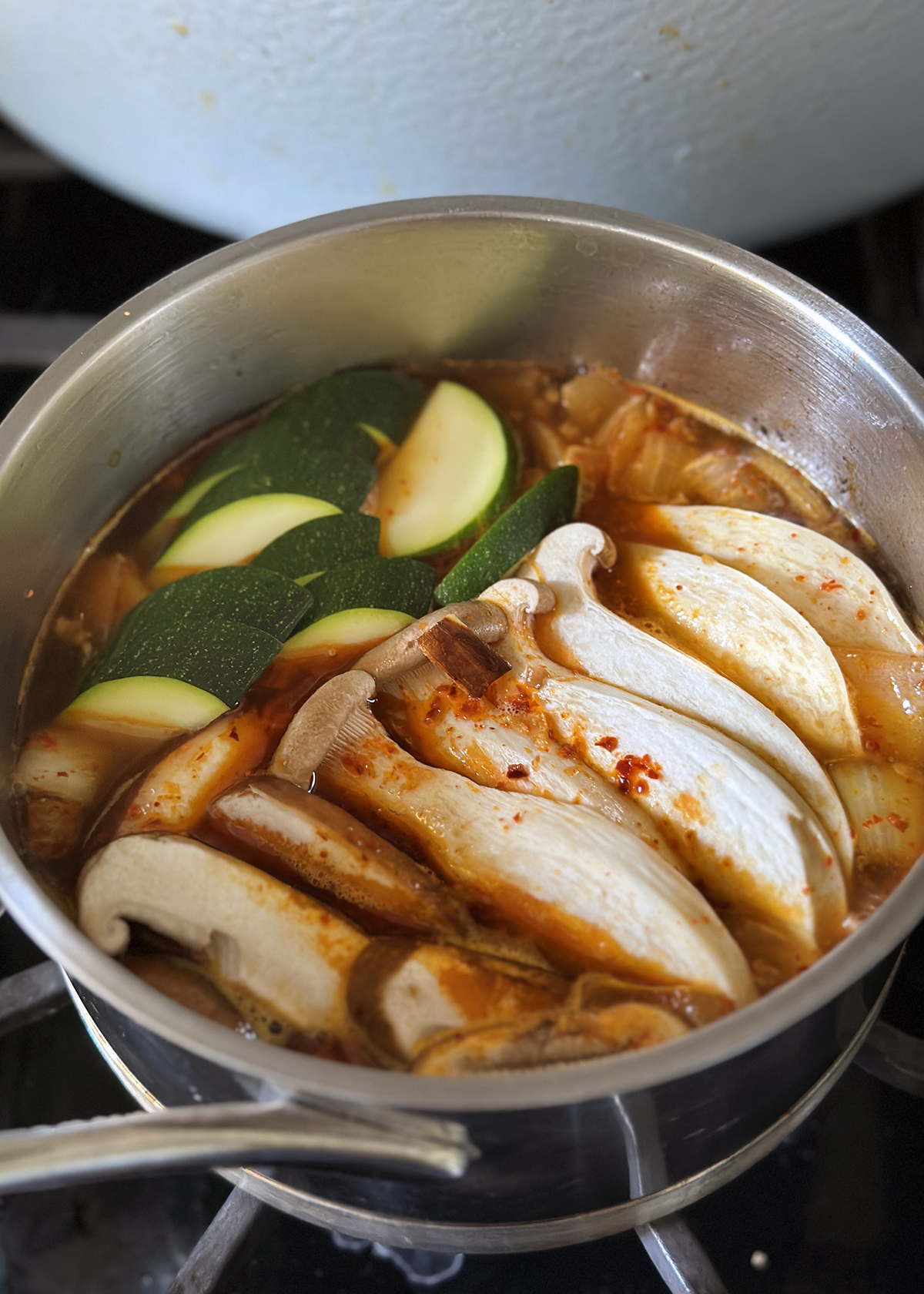
Once the stock comes to a boil, add 2 ounces shiitake mushrooms, 2 ounces king oyster mushrooms, 1 medium zucchini sliced, and silken tofu. Bring back to a boil, then turn down heat to medium and simmer until mushrooms are cooked through, about 4 minutes. Taste soup base and season with coarse sea salt (or more soy sauce) as needed.
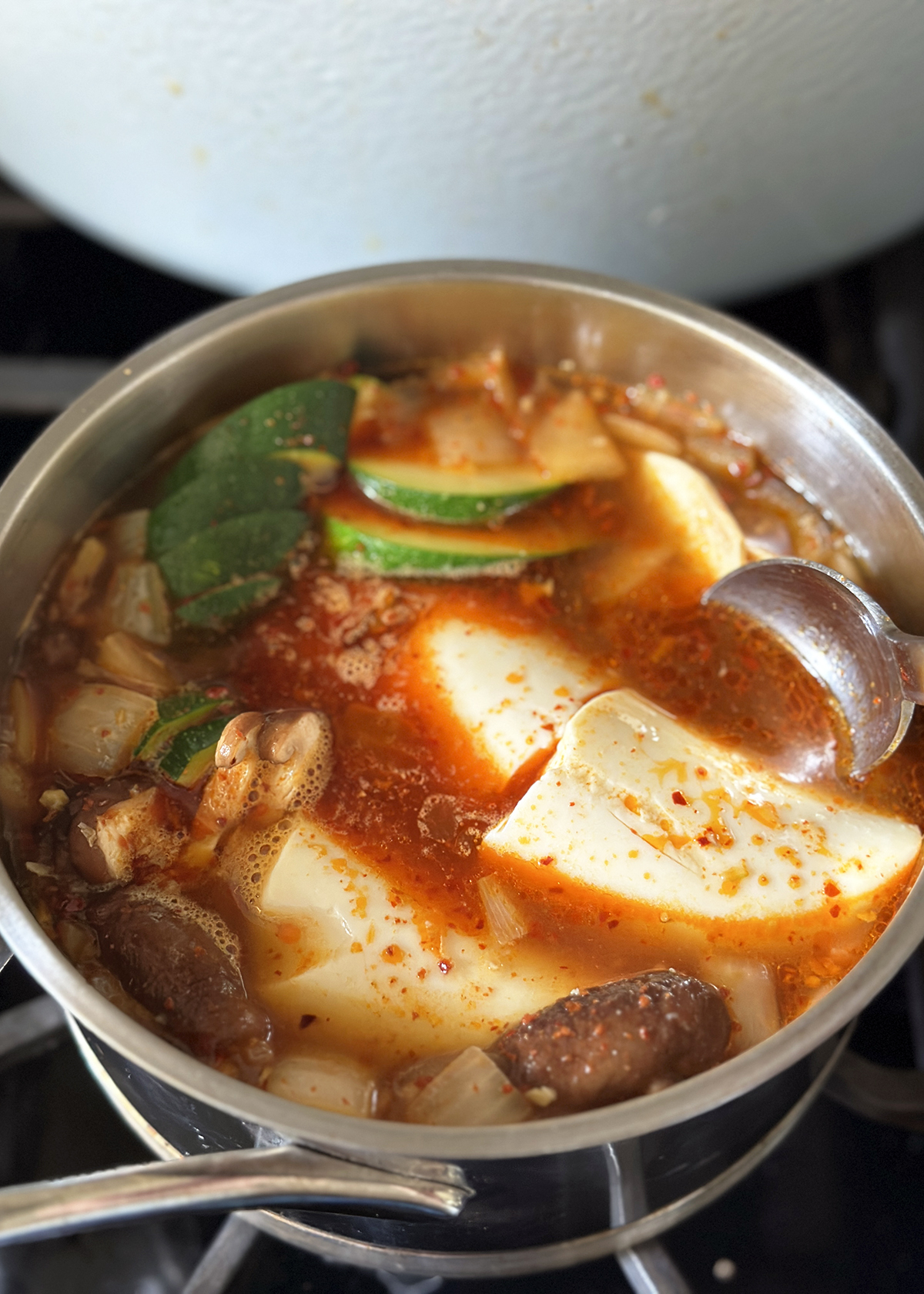
If using optional eggs, just before serving, crack whole 2 eggs into pot, and do not disturb; you are essentially poaching eggs in the soup base. Boil until your preferred cook temperature for eggs, about 3 minutes for set white and runny egg yolk, up to 5½ minutes for a solid yolk (my preference).
Using a large, deep ladle, spoon the Soon Doo-boo Jji-gae into serving bowls, evenly distributing the mushrooms, vegetables, and tofu, and including one whole egg for each serving. Garnish each bowl with a drizzle of toasted sesame oil, sliced green onions, and 2-4 slices jalapeño pepper and fresh cracked black pepper if using.
Serve Soon Doo-boo Jjigae directly from pot at the table to share, or ladle into individual bowls.
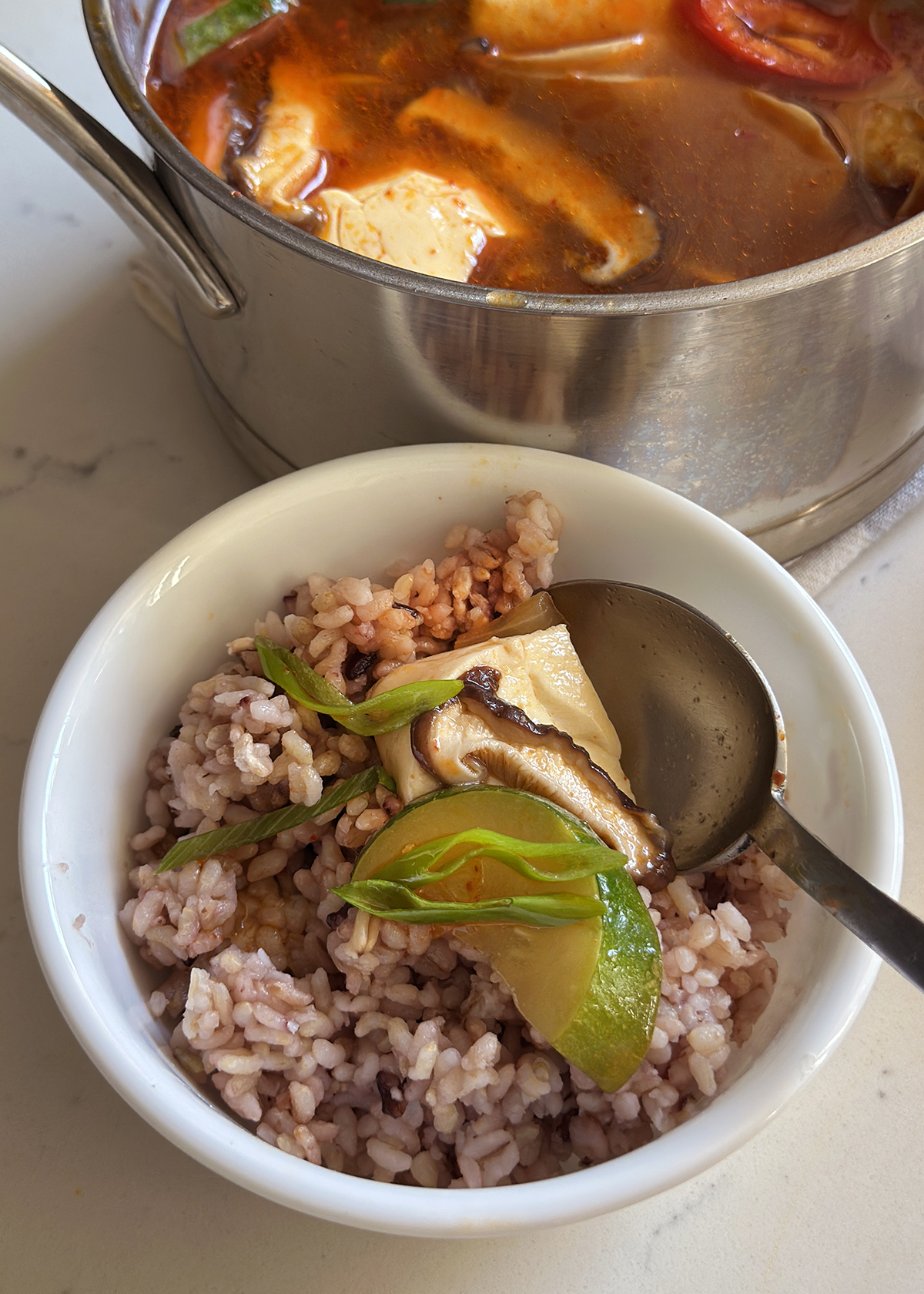
How to Eat Soon Dooboo Jjigae
Take a spoonful of rice, then dip it into the Soon Dooboo Jjigae for the rice to soak up some the broth, and scoop up some of the tofu and other ingredients!
Can You Cook Soon Dooboo Jjigae in Advance?
Yes! You can cook this Doenjang Jjigae in advance to store in the refrigerator and eat the next day. Just make sure to cool the Doenjang before you refrigerate.
To re-heat, return the soup to a pot, bring to a boil, turn down heat and simmer for 10 minutes. Garnish and serve immediately.
How to Store Prepped or Leftover Soon Dooboo Jjigae
Refrigerator. You can keep cooked Soon Dooboo Jjigae in the refrigerator for 3 days.
Freezer. YES you can freeze Soon Dooboo Jjigae! Though it's so fast and easy to cook on the spot, you can cook and freeze for about 3 months. The way that works best for how I maintain my freezer is portioning the Soon Dooboo Jjigae directly into freezer-safe quart-sized bags, squeezing out all the air, sealing, and laying flat in the freezer until it freezes. Then I stand the bag or multiple bags up and line them up like thin books on a bookshelf. If you're looking to reduce single-use plastic, these are re-usable ziptop bags.
One thing to note with respect to freezing: tofu changes texture when you freeze it. It will get spongy and taste a little chewier.
Suggested Additions and Variations
Add 1-2 cups of any of the following vegetables along with the onions at the beginning of the recipe. Make sure to cut the vegetables into 1-inch pieces:
- Korean radish or daikon radish
- white potatoes
- butternut or kabocha squash in the fall and winter instead of zucchini
Make it Extra Spicy by stirring in a teaspoon or two of gochujang along with the broth or stock.
Tools and Equipment

- Dutch Oven. This is the large, oval Dutch oven I use for braising.
- Stock Pot: If you want a slightly lighter weight pot, I like this very large stock pot by this cookware company. It has a heavy bottom and easy-to-hold handles. Any large pot that fits the ingredients will do.
- Stainless steel tongs
- Strainer
- Large bowls, one that fits within the other. I use both stainless steel and glass mixing bowls.
- Thermometer
- Quart sized mason jars
- Plastic sealing lids for jars. Get rid of those annoying two-piece metal lids that come with mason jars (unless you're doing actual canning) and get wide-mouth lids for the larger jars, and wide-mouth smaller jars
- Plastic storage containers: I keep a decent supply of these plastic quart (32 ounces) containers for any- and everything. The containers are technically "disposable," but they can be used a few times with hand-washing between uses. The best thing, though, is freezer-safe glass. Always make sure the stock is cool before pouring into any type of storage container.
- Large format ice cube trays. If you plan to make and freeze bone borth for the rest of your life, these "souper cube" trays specifically dedicated to broths and soups are great to have.
What to Serve with Soon Dooboo Jjigae

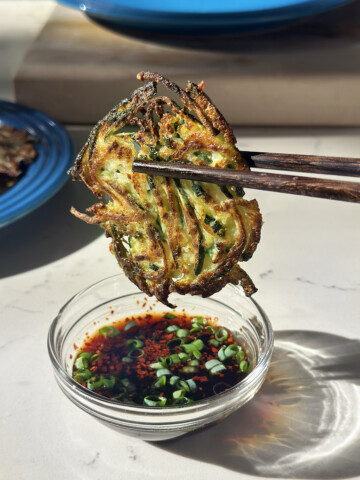
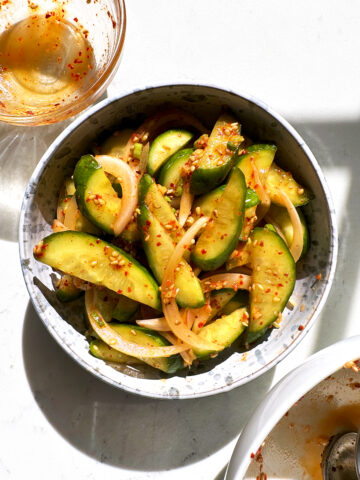

Soon Dooboo Jjigae is technically a one-pot meal, so you don't really need anything else to serve and eat with it except for a bowl of fluffy steamed rice. However, it wouldn't be a Korean dish if you didn't serve some kind of banchan along with it. Serve with any of these alongside:
- Sesame Broccoli Banchan
- Hobahk Jun, Korean Crispy Zucchini Pancakes
- Oi Muchim, Korean Spicy Cucumbers
- Korean Sesame Spinach
Soon Doo-boo Jji-gae aka Korean Spicy Silken Tofu Hot Pot
Ingredients
for Soup Base:
- 1 tablespoon avocado oil or other neutral cooking oil not olive oil
- ½ yellow or white onion chopped
- 2 cloves garlic finely minced
- 2 tablespoons gochugaru Korean chili powder
- 1 tablespoon soy sauce
- 1 teaspoon fish sauce
- 2 cups broth or stock mushroom, rich vegetable, or anchovy kelp stock
- coarse sea salt as needed for taste
for Soon Doo-Boo Jji-gae:
- 2 ounces shiitake mushrooms sliced
- 2 ounces king oyster mushrooms sliced
- 1 medium zucchini ½-inch slices
- 1 package 11- or 12-ounce Korean soft silken tofu comes in 11 ounce tube or 12 ounce rectangular package
- 2 eggs
garnish for serving:
- 2 teaspoons toasted sesame oil
- 1 stalk green onion thinly sliced on a deep bias
- fresh cracked black pepper optional
- 2-4 slices jalapeño pepper or serrano pepper for more spicy, optional
Instructions
- Heat 1 tablespoon avocado oil or other neutral cooking oil in a pot over medium high heat. Add ½ yellow or white onion and 2 cloves garlic and cook until onions begin to turn translucent and garlic becomes fragrant, about 3 minutes.
- Add 2 tablespoons gochugaru, 1 tablespoon soy sauce, and 1 teaspoon fish sauce if using, and stir to combine and lightly toast the gochugaru, about 1 minute.
- Pour in 2 cups broth or stock, turn up heat and bring to a boil.
- Once the stock comes to a boil, add 2 ounces shiitake mushrooms, 2 ounces king oyster mushrooms, 1 medium zucchini sliced, and silken tofu. Bring back to a boil, then turn down heat to medium and simmer until mushrooms are cooked through, about 4 minutes. Taste soup base and season with coarse sea salt (or more soy sauce) as needed.
- Just before serving, crack whole 2 eggs into pot, and do not disturb; you are essentially poaching eggs in the soup base. Boil until your preferred cook temperature for eggs, about 3 minutes for set white and runny egg yolk, up to 5½ minutes for a solid yolk (my preference).
- Using a large, deep ladle, spoon the Soon Doo-boo Jji-gae into serving bowls, evenly distributing the mushrooms, vegetables, and tofu, and including one whole egg for each serving. Garnish each bowl with a drizzle of toasted sesame oil, sliced green onions, and 2-4 slices jalapeño pepper and fresh cracked black pepper if using.
Nutrition
Food for Afterthoughts
There is but one, only one, reason you would ever eat at Hodori Restaurant - you are drunk in Koreatown after 2 am and can't figure out where the other holes in the Great Wall of Koreatown are because you can't call 411 because you don't know the English name for "Sahn."
If you're drunk on the Westside late in the evening, you certainly wouldn't drive all the way out to Koreatown eat a sobering meal, and if you're in Koreatown at any other time of day, you should probably go to Sa Rit Gol. It has to be the complete combination of all factors - drunk, Koreatown, late - otherwise, really, you just have no excuse.
We were drunk. We were in Koreatown. It wasn't quite 2 AM when we decided to sober up, but by the time we descended upon Hodori like the buzzards we were, the clock had just turned. Perfect drunken timing.
Hodori is in a strip mall on the southwest corner of Olympic Blvd and Vermont Avenue. Though you may not see the sign for the restaurant right away, there is no way you can miss the screaming neon of the entire plaza. Just make sure you can get into the plaza. At prime time, you may have to grease the parking patrol's hand to land a spot inside the plaza. Otherwise, you wait in your idling car until someone leaves. Once you're in the plaza, look for Hodori, the dorky tiger that was the symbol of the Seoul Olympics of which Koreans are unnecessarily proud. Seriously? The Olympics were over in 1984 1988 (thanks, anonymous). Move on.
With fluorescent lighting, tables smacked up against one another end to end, and a calming, chaotic din, Hodori has a bit of a cafeteria vibe. Enormous menus are posted high above on the walls behind the counter, written in Korean, translated into English, and I can't be sure, but I think there are some with photographs, for those of us who are at a point in the evening when all we can do is recognize images.

panic button

bahn-chan, bring it ahn
Hodori serves café-style Korean food - soups, jjigaes, and rice dishes - all things suited to sober one's senses and attempt to pre-empt the imminent hangover with food coma. My personal poison, when it's not Citron/soda, is a bowl of yook-gae-jahng, a five-alarm beef and green onion soup that perhaps helps sober me up only because it makes me sweat so hard that any residual alcohol in my system will come flooding out of my pores. I won't even mention the fire-rrhea the next day. Oops. I just did.
We went all kinds of crazy and ordered, instead, something else. Bi-bim-bahp wasn't my choice. For one thing, paying money for what is essentially a bowl of white rice (free) with marinated vegetables (bahnchan is free) and hot sauce (condiments on table are free) seems a ridiculous waste. I suppose you're paying that $6.99 or whatever it is for the fried egg on top which, despite the fact that I have a long-time love affair with eggs, I always remove from bi-bim-bahp. Plus, mixing the ingredients together is just way too much work. However, I do appreciate a good, overwhelming dose of goh-choo-jahng, so I didn't argue. Many people go bonkers for dolsot bi-bim-bahp, which is the same content but in a different presentation. Instead of the usual oversized stainless steel bowl of regular bi-bim-bahp, the rice is served in a "dolsot," a heated stone pot that causes the rice to sizzle and create a disgusting crust on the bottom that is, for some weird reason, a highly prized ending to the meal. It's the crust. It's residue. Gross, but whatever. I drink the milk at the bottom of the bowl of cereal, so I shouldn't talk.

mashup of bahnchan, imho

five alarm wake up call
We placed our order of the bi-bim-bahp as well as soon doo-boo jjigae, a tiny little hotpot of soft tofu, vegetables, and sometimes seafood, beef, or pork, that comes to the table still boiling. We sat down at one of the tables and
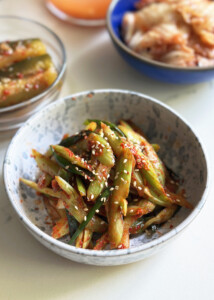
began picking away at the array of bahn-chan: kimchee, ggak-doo-gi (spicy pickled radish), sook-ju namul (marinated sprouts), moo (acorn jelly with vinegared soy sauce), and that ever-so-Korean dish, potato salad! Hodori's bahn-chan selection is decent, but the taste left something to be desired. I shan't complain beyond that since it is "free."
Between rubber-necking the shiny, red-faced clientele around the dining room, "picnicking" on the potato salad, and chattering away about the unraveling of events of the evening, I was tempted to press the tiny little doorbell that is attached to the edge of every table in the restaurant. This is the waitress "call-button" and I have never seen it any other type of establishment other than Korean. It's a doorbell. Though empirically it makes perfect sense to have such an efficient, and "quiet" way of calling the waitress to the table (rather than shouting "yo-gi-yo!" or in a club, raising up candle), it just seems so...cheesy. I never pressed it, since I didn't really have any other reason than to ask where our order was.
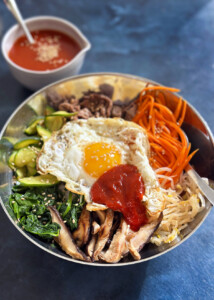
The bi-bim-bahp came out looking exactly as it should - a collage of colorful vegetables with a fried egg on top. After everything was mixed all together, it tasted good enough, though I was slightly disappointed by the goh-chu-jahng sauce that we had to use. It was way too sweet, which has become a frequent complaint of mine of Korean food in restaurants. Either I am becoming increasingly sensitive to sweetness, or Korean restaurants are falling into the trap of making food sweeter to appeal to a wider audience.
We didn't crack a raw egg into the soon dooboo jjigae like people usually do when it arrived gurgling at the table. I have no idea why. I often wonder if serving a raw egg at the table like that is legal, but I suppose if Caesar salads are legal, it's okay. The jjigae was dragon fire red, but it didn't taste as spicy as it looked. It did have, however, the usual paradoxical refreshing sensation, "shyun-hae"-ness, from a steaming, boiling hot, spicy broth. I spent an inordinate amount of effort fishing with the long, thin-handled spoon for the slippery shards of tofu to suck down whole and of course, burnt my mouth on the temperature almost every time.
Hodori wasn't the best meal I've ever had, but when is Denny's, Dolores or Benito's ever the best meal you've ever had?
Scratch that. Benito's is the best meal I've ever had. Every time.
j gold says
But priceless for that...
eugene says
bi bim bap.... oh man, that'd hit the spot right now. though i can't complain as i'm about to down a bowl of gohm tahng.
sarah says
j: and that it's open during after hours :)
eugene: you know what's funny? bibimbahp would be so perfect...without the bahp! then i guess it's just a mashup of bahn chan. and gohn tahng - you said it. that's actually my favorite hangover prevention :)
Anonymous says
Just wanted to stop by and say I just found your blog a couple weeks ago and absolutely love it. Normally I just scroll through pics on food blogs but your writing is awesome! Hope you keep up the great work :)
-Pam
JF says
The BEST place for sobering up...and to think, just a year ago you were talking about Benito's for sobering up...good to see you on the "East" side of LA once in a while! Someone needs to review the place next door to Hodori. It's not bad either for sobering up.
JF says
The BEST place for sobering up...and to think, just a year ago you were talking about Benito's for sobering up...good to see you on the "East" side of LA once in a while! Someone needs to review the place next door to Hodori. It's not bad either for sobering up.
Anonymous says
too bad you don't even know the actual date for the Seoul Olympics. Not 1984. 1988. So before you diss on the name, get your facts straight.
Anonymous says
too bad you don't even know the actual date for the Seoul Olympics. Not 1984. 1988. So before you diss on the name, get your facts straight.
Androo says
Has anyone else had difficulty getting ANY kind of service at Hodori without a Korean in tow? Or is it just that the 3 am shift isn't exactly hustling when dealing with slurred food orders?
When I'm there, I think I fit the conditions Sarah put forward to a T.
GT says
I'm surprised you didn't end up at the other "drunk, Koreatown, late blah blah place" - BCD. Hodari gets a little to underage for me. I'm partial to Mexican for late night eats lately.
Anonymous says
Sahn is Mountain Cafe, on 8th and I think Berendo. 213-487-7615. My bf and I always order takeout or order in advance so we can eat right when we get there. 213-365-1111 is a korean directory in case you ever need a number for a korean place - but its in korean...hanna
Hiro says
Ha! The panic button. I love that. I've been there more than I'd like to admit.
Hiro @ West LA Foodblog
westlafoodblog.blogspot.com
joanh says
i like this place.. though someone really needs to open a decent korean place on the westside!
James says
Very interesting I will have to remember that if I am ever near there drunk at 2am.
Vauxhall engines and car salvage.
James says
Very interesting I will have to remember that if I am ever near there drunk at 2am.
Vauxhall engines and car salvage.
Jessica says
Um, I'm not sure whether I should be embarrased or not, but I still LOVE hodori! Hubs and I will go there all the way from the Westside just to eat Yukhaejang! Actually, the last time we did that was probably 6 months ago but I STILL love it!
Jonathan says
i love reading this, neighbor!
Jonathan says
i love reading this, neighbor!
One-eyed Doowite says
Hey, babycakes!
Some guy did a numba on my face in Hodori's parking lot one a.m. a coupla of years ago.
Thanks for the memories!
SteamyKitchen says
I've been there, but its been a while and it was REALLY bad K-food. It didn't help that I was having a bad hair day and heartbroken - so maybe I just looked kinda like homeless lost soul.
Deborah Dowd says
Sounds like an adventure (culinary and otherwise!) Your post was hilarious though!
Aaron says
Mmm, wish I had the time to drivet he 2 hours to get some delicious food.
Also, this might be of interest.
http://mykoreankitchen.com/2007/01/29/korean-sweet-pancakes-hoddeok-fully-home-made-version/
U says
I live for the rice in the bottom of the dolsot. I wish I could order just that alone...
U says
I live for the rice in the bottom of the dolsot. I wish I could order just that alone...
Katlyn says
This post made me smile. But for a food blogger, you seem to have been eating a lot of mediocre stuff these days. When was the last time you ate something that thrilled you?