
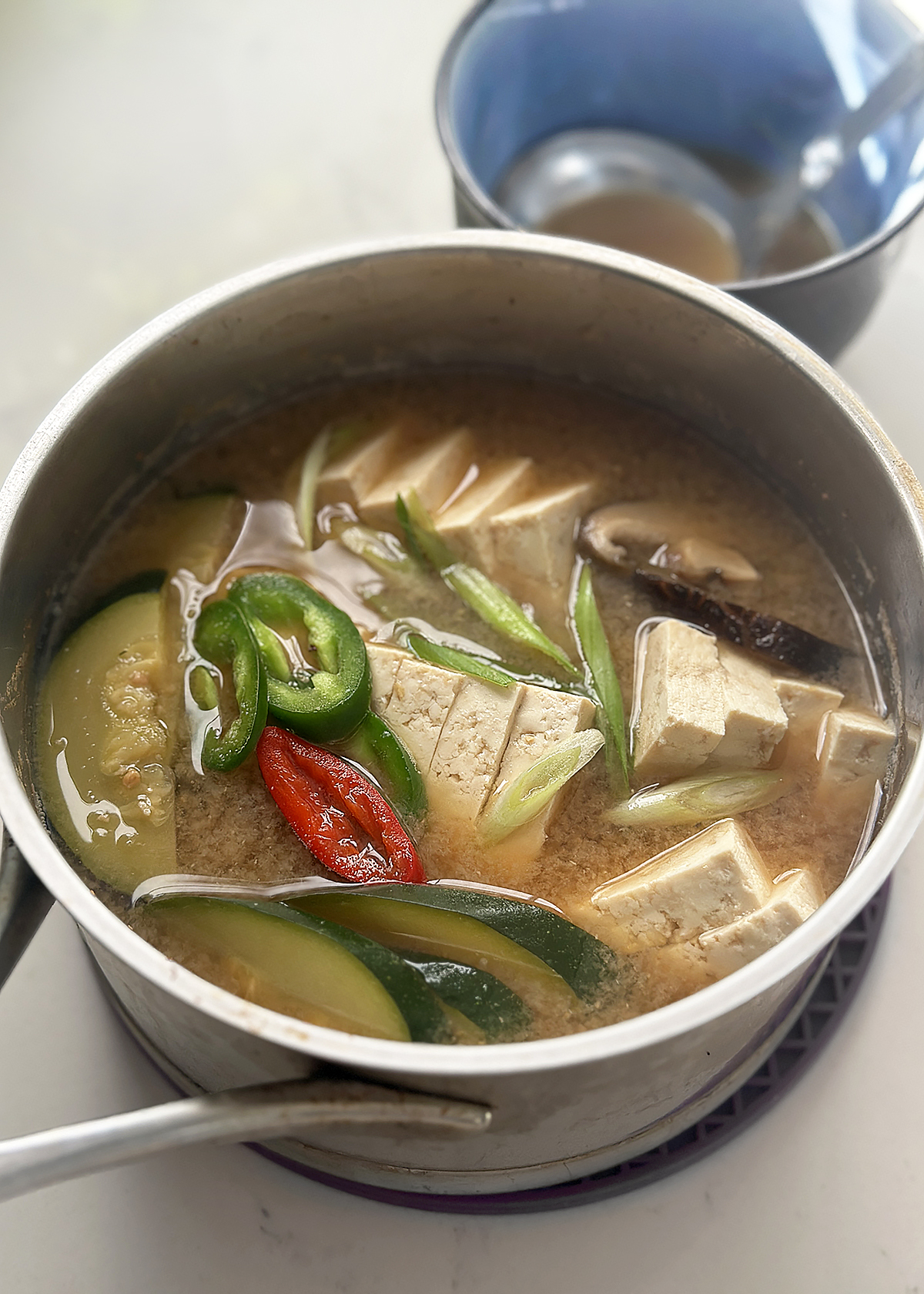
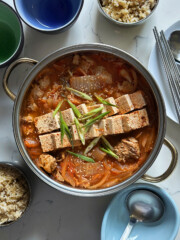
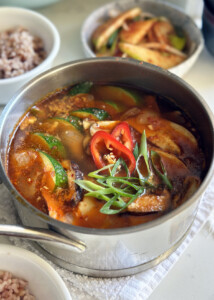
That bubbling little stone cauldron full of vegetables and tofu that often comes to the table alongside Korean BBQ? That's Doenjang Jjigae and you can very easily make it at home by throwing a bunch of deliciously umami ingredients into a pot then simmering on the stovetop for a few minutes! Shall we?
What is Doenjang Jjigae 김치찌개?
Doenjang Jjigae is a deeply flavorful hotpot/stew made with tofu, vegetables, and sometimes meat or seafood in an umami-rich anchovy-based doenjang broth. Some old-school (Korean grandma!) versions add the water from rinsing rice in order to thicken the broth.
This Doenjang Jjigae recipe, my personal preference for flavor and ease, uses whatever broth you already have, skips any meat or seafood, and adds extra firm tofu as the protein source.
What is Doenjang?
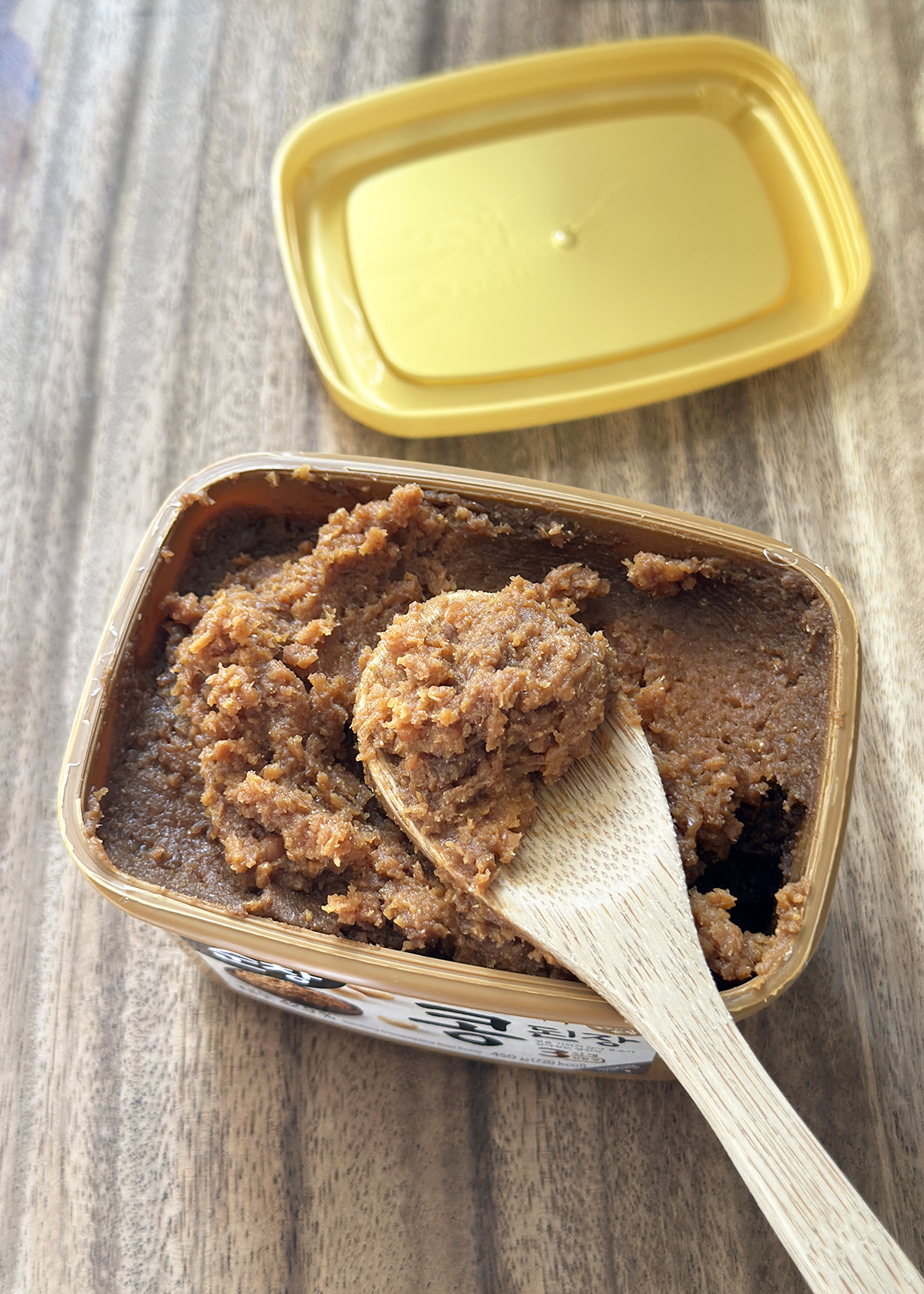
Doenjang is a fermented soybean paste, not unlike Japanese miso, but with more funk and deeper flavor. It is usually not used on its own, but as an ingredient in other dishes. It is the primary ingredient in Doenjang Jjigae and other Korean recipes, notably one of my all-time favorite condiment/dip/sauces, Ssam Jang.
Difference Between Korean Jjigae, Gook, and Tang?
All the dishes mentioned, Jjigae, Gook, and Tang, are types of broth-based Korean soups and stews. The differentiating factors are usually preparation methods, how brothy the base is, and the way the dish is served and eaten.
Jjigae is commonly referred to as a "stew" in English. The broth base is slightly thicker and saltier than a classic soup. Traditionally, jjigae is cooked in an earthenware pot and served in the same pot at the table. Everyone at the table shares the jjigae. Well-known jjigaes include: Kimchi Jjigae, Soon Tofu Jjigae (silken tofu), Doen-jang Jjigae (soybean paste), and Budae Jjigae (Korean "Army Base" stew).
Guk and Tang both refer to brothy soups. The differences between the two types of soup are almost too subtle to be described.
- Tteok-guk Korean rice cake soup
- Mandoo Guk, Korean dumpling soup
- Mu Guk, light, brothy Korean radish soup
- Galbi Tang, Korean short rib soup
Health and Dietary Considerations of Doenjang Jjigae
As printed, this Doenjang Jjigae recipe is:
- dairy-free
- gluten-free
- refined sugar-free
Depending on the type of tofu, one serving of this dish can have anywhere from 45 to 55 grams of protein!
Healthy, Modern Updates to the Doenjang Jjigae Recipe
Depending on your health needs and dietary considerations, Doenjang jjigae can be healthy! Doenjang, a miso-like fermented soybean paste, is rich in antioxidants and gut-friendly probiotic bacteria from the fermentation. My Doenjang Jjigae recipe made with tofu is healthier for me and others of us who are following an anti-inflammatory diet because the tofu provides leaner protein.

Ingredients You Need for Doenjang Jjigae
Fresh ingredients you need from the refrigerator:
- Doenjang
- Garlic
- Onion
- Mushrooms
- Zucchini
- Firm Tofu
- Green onions
- Jalapeño pepper
Dry ingredients you need from the pantry:
- Broth or stock
The beauty of Doenjang Jjigae is that once you get the doenjang base broth down, you can customize your pot by changing the type of protein and adding any other vegetable to the dish. Hearty root vegetables like potatoes, Korean or daikon radish, and shiitake mushrooms are personal favorites. But I have made this dish many times even with not-so-obvious for stew vegetables like butternut squash, broccolini, kale, spinach, and baby bok choy.


What Doenjang Should I Buy and Use
Doenjang is a huge category with many brands and producers, from large-scale commercial brands to jars made by a bunch of tiny Korean grandmas in the back room of a hole-in-the-wall market. Doenjang is usually packaged in golden beige plastic tubs and jars, similar to the way all gochujang is packaged in red.
What to Look For
The best doenjang will have only two ingredients, soybeans and salt. However, most commercial brands sold in stores also have additional ingredients like alcohol as a preservative, flavor enhancers like sugar and MSG, and fermentation aids like wheat and koji.
Read the labels for the shortest ingredient list. The fewer ingredients, the more "authentic," (and probably more expensive!)
Best Doenjang Brands
These are brands of doenjang I actually use and recommend, mostly because I look for products with no sugar/sweeteners and no wheat:
- Sempio Togul Doenjang contains only soybeans, water and salt, with an aging period of 6 months.
- Sempio Bek-il Doenjang, same brand and ingredients as above, but specifically labeled as "aged for 100 days"
- Chung Jung One "Kong" Doenjang, has soybeans, salt, and added koji starter, but this has been the easiest one to find, for me, in a Korean grocery store that has no wheat or msg. The texture is more coarse, with larger pieces of soybeans.
This brand makes doenjang with only soybeans and salt, and is available online. I have not tried it.
Doenjang, like any condiment, varies in aging time, level of intensity of flavor, texture, and ingredients across brands. The base ingredients are soybeans and salt. From there, ingredients vary, including wheat and koji starter to speed up fermentation, alcohol or other form of preservatives, and sometimes even seasonings like garlic and/or onion. Read the labels to look out for any ingredients to which you are sensitive.

Can You Substitute Miso for Doenjang?
Of course you can substitute miso for doenjang, but I'd only go this route as a very very very last resort, using the darkest miso you can get.
Both Japanese miso and Korean doenjang are made of fermented soybeans, but they taste different. Korean doenjang is saltier, "funkier," and may have a coarser texture. Miso is lighter, milder, and some kinds may even have an underlying natural sweetness.
If you only have miso, you won't really be making Doenjang Jjigae, it'll be a Miso-flavored Tofu Jjigae. If you go this rout, use the darkest miso you can find, usually a red miso called "aka-miso" that's fermented longer so it's deeper in flavor and saltiness.
Additional Ingredients Notes and Resources
Broth or Stock. I will always recommend that you make your own bone broth, but like the Barefoot Contessa says, store-bought is fine. Read the ingredients list and get one with chicken as the first ingredient, and without added sugar or preferably without salt. I use mushroom stock.
Sesame oil. Use toasted, not regular, sesame oil. Toasted sesame oil is dark brown and is used as a finishing oil, not as a cooking oil. This is the Japanese brand that everyone and their mothers' have been using for years. You can find organic like this one in natural and higher end grocery stores.
Toasted Sesame Seeds add texture and a layer of umami. Make sure the seeds are toasted, otherwise toss them in a hot, dry skillet over medium heat for about 90 seconds or until they are fragrant.
Instructions for How to Make Doenjang Jjigae
Doenjang Jjigae is fairly straight-forward to make. You literally put everything in a large pot, bring to boil, then simmer for until the vegetables are cooked through.
If you haven't already, prep all the vegetables and tofu: cut onions into large dice, mince or grate garlic, slice zucchini into ¼-inch wide half moons or cubes, and slice fresh shiitake mushrooms.

In a heavy bottom pot, bring broth (or water), onions, and garlic to a boil over medium high heat. Turn down heat and simmer 5 minutes, until onions begin to soften.

Place doenjang in a small heat-proof bowl and add about ¼ cup of the boiling broth. Whisk to dissolve the doenjang.

Add the dissolved doenjang, zucchini, and mushrooms to the pot and continue to simmer for another 5 minutes.
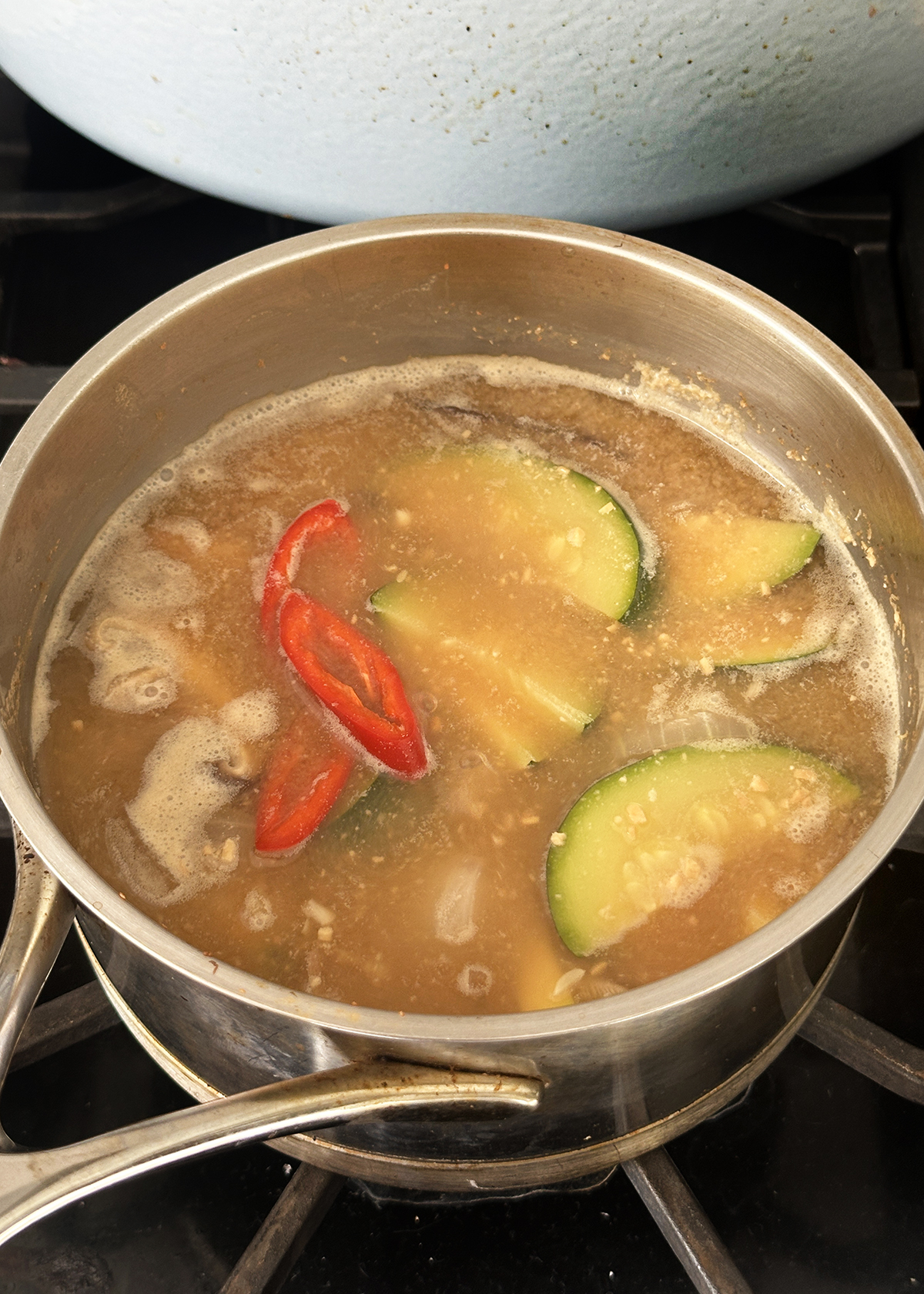
Add a few jalapeño pepper slices and stir in. Add fewer if the jalapeños are particularly spicy, or you prefer less heat.
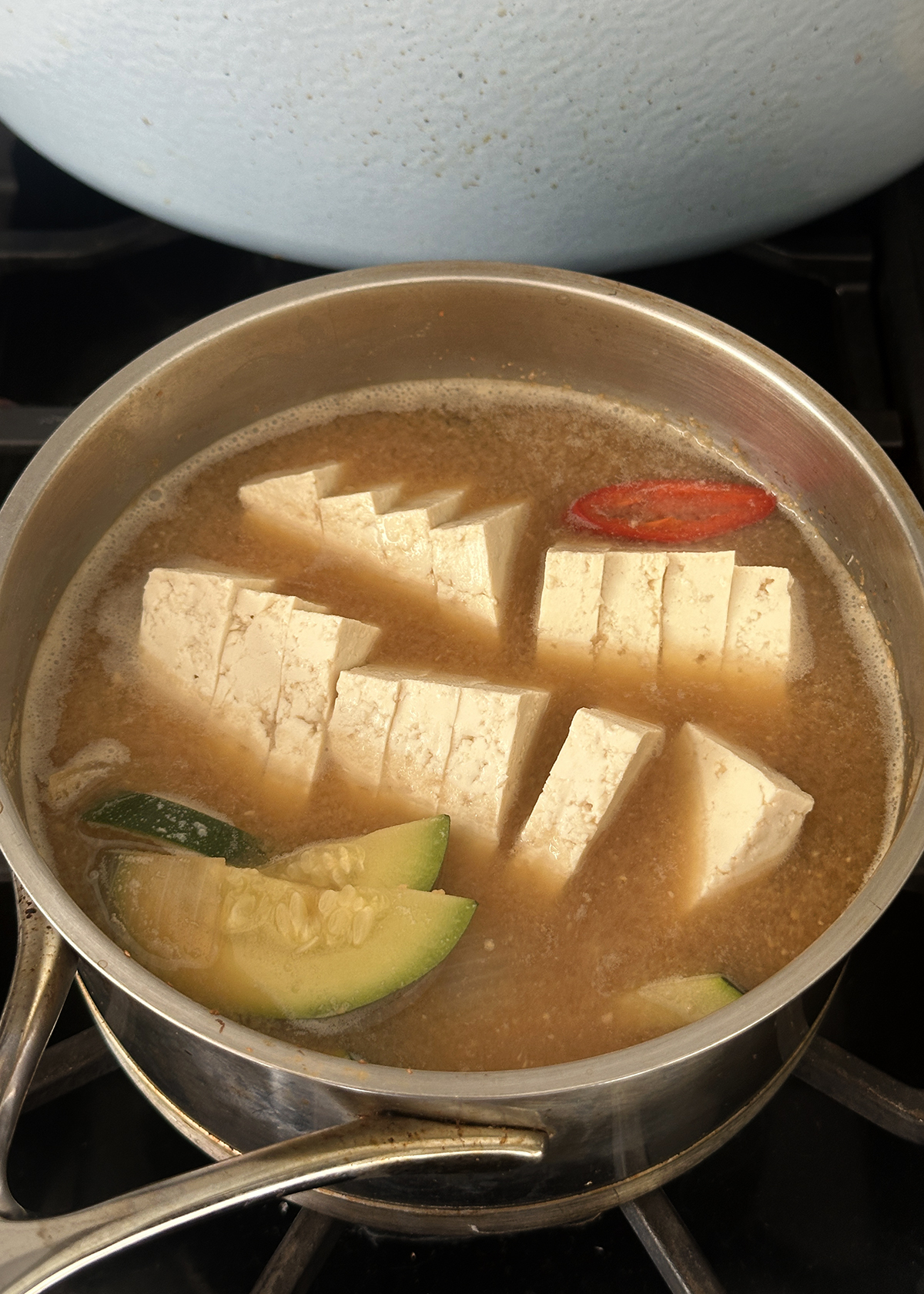
Place tofu on top and gently push down until they are just barely submerged in the broth. Simmer for about 2 minutes to warm tofu through.

Top with sliced green onions and more fresh jalapeño pepper slices.
Serve Doenjang Jjigae directly from pot at the table to share, or ladle into individual bowls.

How to Eat Doenjang Jjigae
Take a spoonful of rice, then dip it into the Doenjang jjigae for the rice to soak up some the broth, and scoop up some of the tofu and other ingredients!
Can You Cook Doenjang Jjigae in Advance?
Yes! You can cook this Doenjang Jjigae in advance to store in the refrigerator and eat the next day. Just make sure to cool the Doenjang before you refrigerate.
To re-heat, return the soup to a pot, bring to a boil, turn down heat and simmer for 10 minutes. Garnish and serve immediately.
How to Store Prepped or Leftover Doenjang Jjigae
Refrigerator. You can keep cooked Doenjang Jjigae in the refrigerator for 3 days.
Freezer. YES you can freeze Doenjang Jjigae! Though it's so fast and easy to cook on the spot, you can cook and freeze for about 3 months. The way that works best for how I maintain my freezer is portioning the Doenjang Jjigae directly into freezer-safe quart-sized bags, squeezing out all the air, sealing, and laying flat in the freezer until it freezes. Then I stand the bag or multiple bags up and line them up like thin books on a bookshelf. If you're looking to reduce single-use plastic, these are re-usable ziptop bags.
One thing to note with respect to freezing: tofu changes texture when you freeze it. It will get spongy and taste a little chewier.
Suggested Additions and Variations
Add 1-2 cups of any of the following vegetables along with the onions at the beginning of the recipe. Make sure to cut the vegetables into 1-inch pieces:
- Korean radish or daikon radish
- white potatoes
- butternut or kabocha squash in the fall and winter instead of zucchini
Make it Extra Spicy by stirring in a teaspoon or two of gochujang along with the doenjang.
Tools and Equipment

- Dutch Oven. This is the large, oval Dutch oven I use for braising.
- Stock Pot: If you want a slightly lighter weight pot, I like this very large stock pot by this cookware company. It has a heavy bottom and easy-to-hold handles. Any large pot that fits the ingredients will do.
- Slow Cooker: I have this 6-quart programmable slow cooker. If you are going to use a slow-cooker, I highly recommend getting/using a slow-cooker that has a timer or auto-shut-off so you can truly "set it, and forget it," which is kind of the point of a slow-cooker, imho.
- Stainless steel tongs
- Strainer
- Large bowls, one that fits within the other. I use both stainless steel and glass mixing bowls.
- Thermometer
- Quart sized mason jars
- Plastic sealing lids for jars. Get rid of those annoying two-piece metal lids that come with mason jars (unless you're doing actual canning) and get wide-mouth lids for the larger jars, and wide-mouth smaller jars
- Plastic storage containers: I keep a decent supply of these plastic quart (32 ounces) containers for any- and everything. The containers are technically "disposable," but they can be used a few times with hand-washing between uses. The best thing, though, is freezer-safe glass. Always make sure the stock is cool before pouring into any type of storage container.
- Large format ice cube trays. If you plan to make and freeze bone borth for the rest of your life, these "souper cube" trays specifically dedicated to broths and soups are great to have.
What to Serve with Doenjang Jjigae
Doenjang Jjigae is technically a one-pot meal, so you don't really need anything else to serve and eat with it except for a bowl of fluffy steamed rice. However, it wouldn't be a Korean dish if you didn't serve some kind of banchan along with it. Serve with any of these alongside:
- Oi Muchim, Korean Spicy Cucumbers
- Spicy Cucumber Salad with Avocado
- Din Tai Fung Dupe Cucumbers
- Korean Sesame Spinach
What to Make with Doenjang
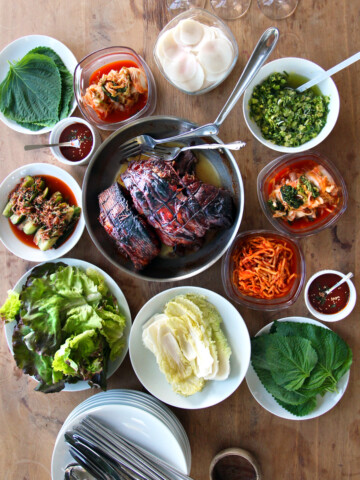
So you bought a container of doenjang and you're wondering what else you can make with it? Think of doenjang like what it is, the older, funkier big sister to Japanese miso, and suddenly your options are endless! Here are some ideas for doenjang to get you started, not the least of which is Ssam Jang, a spicy condiment/dip/sauce that you'll use for everything:
Doenjang Jjigae Recipe
Ingredients
- 3 cups mushroom stock or any broth or stock you have, even water is ok
- ¼ medium onion, large dice
- 2 cloves garlic, finely minced
- 2 tablespoons doenjang
- 1 zucchini, diced
- ¼ cup mushrooms
- 7-8 ounces firm tofu (usually half a package) ¾-inch cubes
- 1 red or green pepper optional chopped
- ½ stalk green onion, thinly sliced
Instructions
- If you haven't already, prep all the vegetables and tofu: cut onions into large dice, mince or grate garlic, slice zucchini into ¼-inch wide half moons or cubes, and slice fresh shiitake mushrooms.
- In a heavy bottom pot, bring broth (or water), onions, and garlic to a boil over medium high heat. Turn down heat and simmer 5 minutes, until onions begin to soften.
- Place doenjang in a small heat-proof bowl and add about ¼ cup of the boiling broth. Whisk to dissolve the doenjang.
- Add the dissolved doenjang, zucchini, and mushrooms to the pot and continue to simmer for another 5 minutes.
- Add a few jalapeño pepper slices and stir in. Add fewer if the jalapeños are particularly spicy, or you prefer less heat. Place tofu on top and gently push down until they are just barely submerged in the broth. Simmer for about 2 minutes to warm tofu through.
- Top with sliced green onions and more fresh jalapeño pepper slices.
- Serve directly from pot at the table to share, or ladle into individual bowls.
Kevin H says
You need to get your mom a kimchi fridge. And you like east coast rap? Nice.
Nikole Sumner says
I love great food and I love leftovers! Very well put in this blog. I use a caterer for my parties so I am ensured of great tasting food as well as some great leftovers. In San Francisco I use Componere Fine Catering. If anyone wants to check them out - http://componerefinecatering.com
Amy Blogs Chow says
Hate thinly veiled press releases.
Sarah J. Gim says
kevin: i am tickled that you picked up the reference. sometimes i wonder if I am too deeply stuck in my own head...
nikole: thanks for the reference!
amy: sent you an email...
Craig says
There used to be a place in Little Tokyo in Honda Plaza that served potato croquettes, squid and beer, lots of beer.
Its gone now, replaced by a Hawaiian food restaurant.
But you will want to go to Sushi-Gen anyway. :)
Sarah J. Gim says
Craig: And for curry, out on the town, I can go to either Hurry Curry or Curry House, both of which are just down the street from me. I think there's another place nearby that also does curry....going to have to find out what it is...
Rach says
I like all the things you have down the left hand side of the page there.
and never mind that I hate potato as well as cheesecake, still I want to RSS your blog. Maybe one day soon you'll cook something I like!
but dammit! why can't I get this blog to RSS? I'm using Google - any ideas what I'm doing wrong?
Sarah J. Gim says
Rach: The Delicious Life RSS feed is managed by feedburner, and you should be able to access it on the "subscribe" link at the upper right hand corner of this page. It opens the feed and should just ask you which reader you want to use in a drop down. If the link at the top doesn't work, this is the feed'a address:
http://feeds.feedburner.com/thedeliciouslife
Let me know is you have trouble. And I'm honored that you want to subscribe :)
Lea of Little Rock Wedding says
I love this food.. This blog is well written. I will used this in my catering services in Little Rock..
Amy Blogs Chow says
Oh dear. Sarah - my comment was not directed at your immensely entertaining Thanksgiving leftovers and delicious-sounding croquette recipe. I was referring to Commenter #2 Ms. Nikole Sumner's out-of-context comment about leftovers courtesy of a catering company. Sorry I did not specify earlier!
michelle says
This looks great!! But any way I can make these sans meat?
Sarah J. Gim says
Amy: no worries :)
Michelle: Of course you can make the croquettes without the meat! I would think that leaving ground beef out would actually make it much easier to shape the croquettes and have them hold up when frying.
Diana says
One of my favorite carb on carb combinations is potato on pizza. With rosemary, salt and white sauce, no less.
But I digress...
I loathe leftovers in most forms (I fear bacteria, and I don't like to eat things that taste dried out and/or stale from refrigeration). I will make exceptions, however, when I'm cooking enough for two dinners in a row, or when there is leftover Thanksgiving turkey. That, my friend, goes directly on a French baguette and is subsequently topped off with leftover cranberry sauce.
And now you know. Aren't you glad?
Sarah J. Gim says
Diana: Potato on pizza! When I first moved to LA and tried CPK and saw the Rosemary Chicken POTATO pizza, I kind of wondered what I was thinking moving to LA (coming from, you know, Ohio). The chicken I could understand, but I was really weirded out by the potato.
Now, naturally, I love it.
deana (lostpastremembered) says
I am in awe of the photo... It sounded delicious to boot! Thanks for the inspiration and photos!