
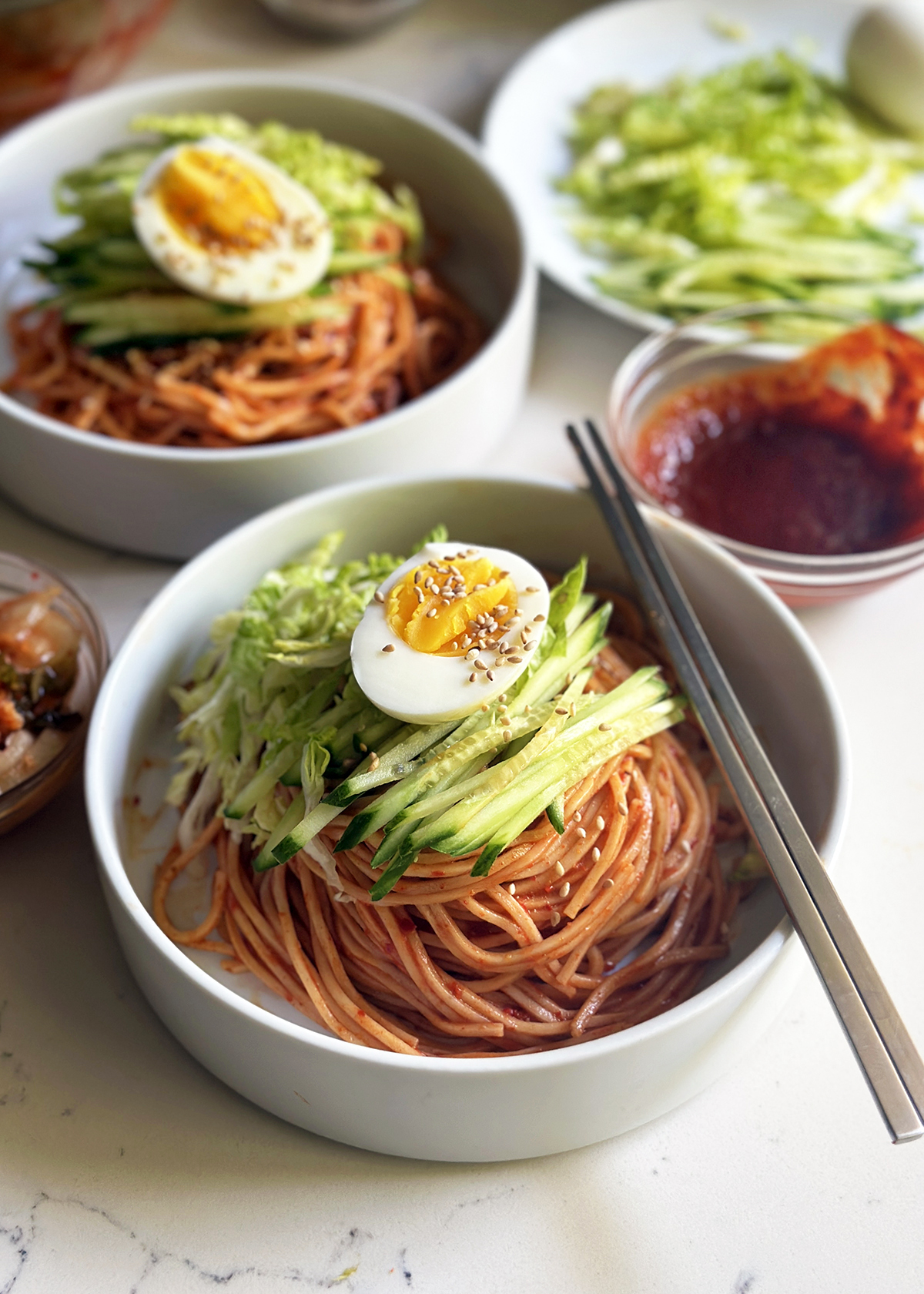
Spicy Korean Cold Noodles, aka Bibim Guksu, is the hottest way to stay cool when the weather gets warm. And its cooling effect on the body and mind, at least early for LA, where it's spring year round and only gets cold-noodles-level hot in September. Shall we?
Explore More

What is Bibim Guksu?
Bibim Guksu is a Korean dish of noodles and fresh vegetables mixed with a spicy, salty, subtly sweet sauce made fast and easy with gochujang. It is one in the family of cold noodles mixed with any number of different sauces that includes bibim naeng-myeon and jaengban guksu.
Some parts of the word Bibim Guksu might look familiar. Bibim means "mix," which is in bibim-bap, Korean mixed rice, and bibim-naeng-myeon, another spicy Korean noodle dish made with naeng myeon noodles.
Guksu is a general Korean word that refers to "noodles." Bibim guksu can be made with any long thin noodle from thin wheat noodles like somen to buckwheat noodles like soba. I almost always use 100% buckwheat soba.
Ingredients You Need for Bibim Guksu
For 4 servings (easily ratio-ed up or down):
Bibim Guksu Ingredients:
- Somen or buckwheat soba, 12-14 ounces, or 4 servings
- Persian cucumber, 4, julienned
- Romaine or green leaf lettuce, shredded
- Eggs, 2 boiled
- Green onion, 1 stalk, thinly sliced
- Toasted sesame seeds, to garnish
optional: chopped kimchi, julienned radish, julienned melon in the summer or Asian pear in the fall!
Spicy Bibim Guksu Sauce:
- Gochujang
- Gochugaru
- Soy sauce or tamari
- Apple cider vinegar
- Sesame oil
- Garlic
- Salt

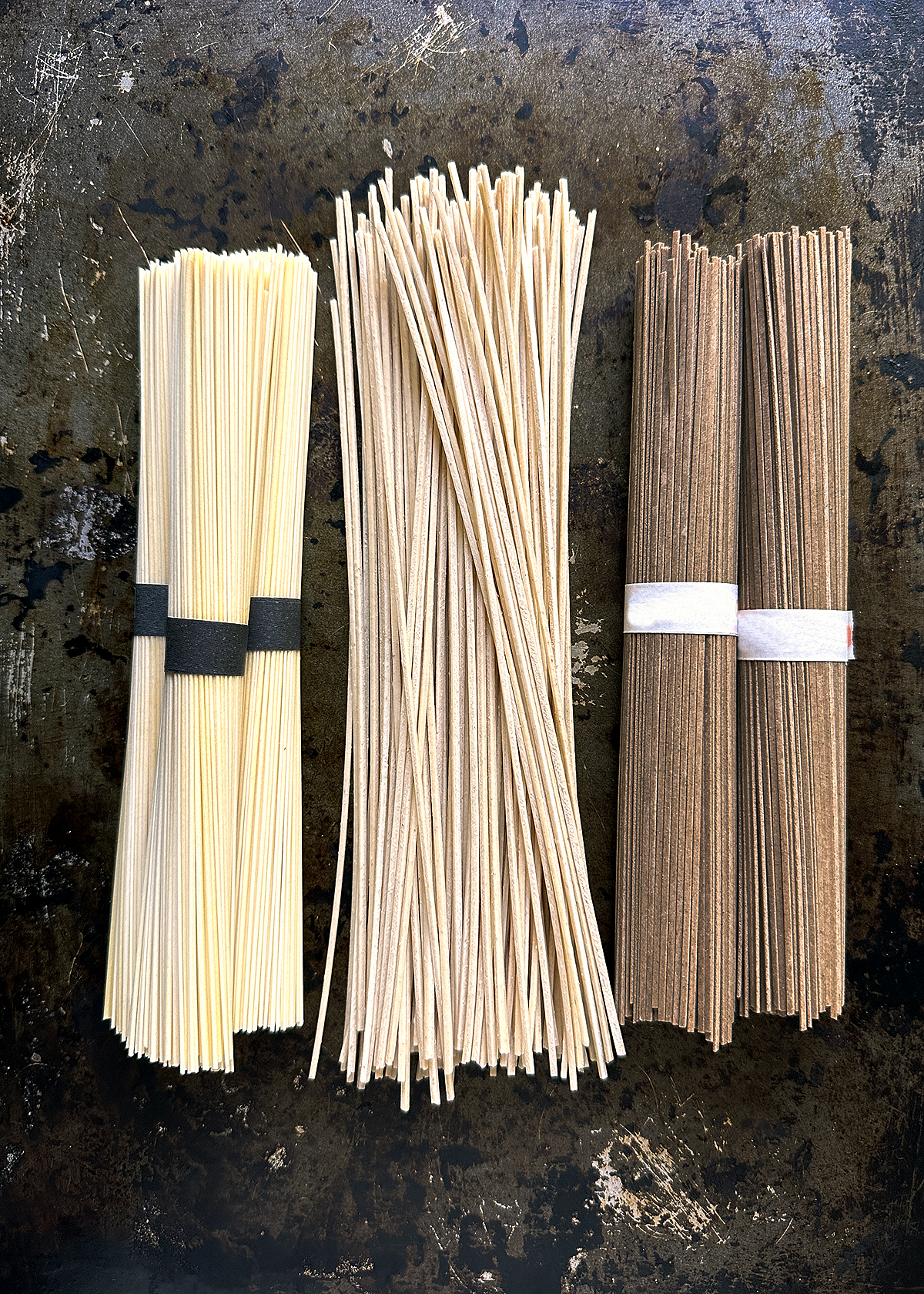
What Kind of Noodles do You Use for Bibim Guksu?
Traditional versions of bibim guksu use somen or soba noodles, which you can find in the Asian noodle aisle or with Asian noodles in the refrigerated section.
- Somen Sometimes spelled "so myeon," super thin noodles made from regular wheat, similar to a very fine angel hair pasta or capellini
- Soba. Made from buckwheat, brown to light gray in color depending on the percentage of buckwheat in the ingredients, and is my personal preference. The noodles are more fragile and don't have a bouncy or chewy texture. 100% buckwheat soba is gluten-free.
If you can't find somen or soba, use any thin noodle or pasta like angel hair pasta or capellini. The key is really the sauce, which you can really mix into any kind of noodle, even bouncy, springy, curly ramen noodles!

Gochujang and Gochugaru for the Sauce
Both gochujang and gochugaru are made from bright red Korean chili pepper, but are different formats. Gochujang refers to a fermented condiment/paste made from very fine gochugaru along with other ingredients like rice flour, sweetener, and salt. Gochugaru refers to the dried chili powder form that can range from fine powder to coarse flakes. You need both for this recipe.
Here are the brands I use:
Gochujang. Gochujang is a Korean hot pepper paste made by fermenting chili peppers with rice and/soybeans. This brand is sweetened with tapioca syrup rather than corn syrup, and does not contain wheat in the ingredients, though the label indicates that it's made in a facility that also processes wheat.
Gochugaru. Gochugaru is a bright red Korean chili pepper powder made from a specific variety of Korean chili pepper. Its heat level ranges, but gochugaru is generally considered a medium spicy chili powder. Look for gochugaru that is made from Korean peppers that are sun-dried, and for this recipe specifically, a coarse grind, or flakes, not a fine powder. You can find gochugaru in Korean grocery stores like H-Mart and other Asian grocery stores. I have also seen some independent, new-ish spice companies like this and this at Whole Foods. This organic brand and the one in the photo above, purchased at HMart, are currently what I have in my pantry.
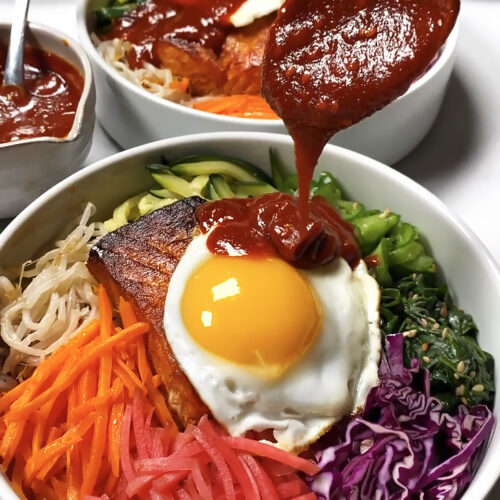
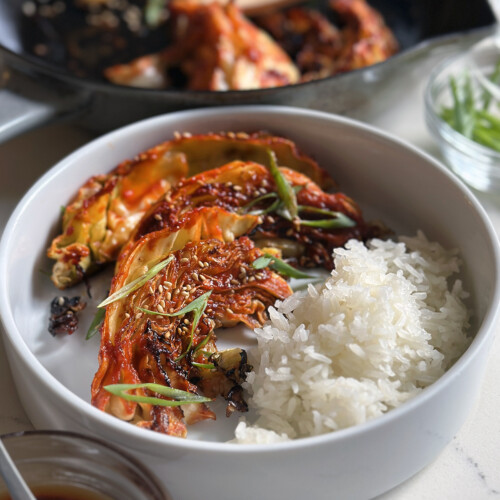
Best Ways to Use Gochujang

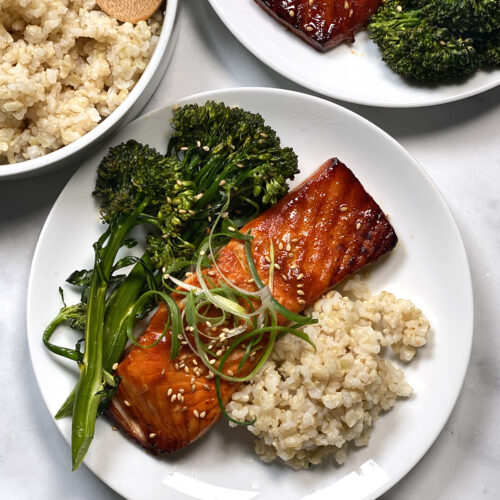
Additional Ingredients Notes and Substitutions
Asian pear. Asian pears are the big, round pears with light beige to brown skin. The texture is crisp but not hard, similar to a Honeycrisp apple, slightly sweet, and very refreshing. If you can't find Asian pears, use a Fuji apple.
Apple Cider or Rice Vinegar. Any brand of apple cider vinegar works. This generic store brand of organic ACV is the most affordable where I shop. This is the well-known apple cider vinegar brand that's available everywhere. I use this organic brown rice vinegar.
Soy sauce or Tamari. I use tamari, which is Japanese-style soy sauce that has little or no wheat. Therefore, tamari can be gluten-free, though not always. If you eat gluten-free, make sure to read labels. I use this organic gluten-free tamari. This brand is also great.
Sesame oil. Look for toasted sesame oil, which has a darker color and a deeper umami flavor. This is a reliable Japanese brand that I've been using since I was a kid. There are now many brands of toasted sesame seed oil available, even organic version, at regular grocery stores.
Maple Syrup. Organic maple syrup like this, or any other sweetener of your choice.
Sesame seeds. Sesame seeds add texture and when toasted, a layer of umami in addition to the toasted sesame oil. You can buy sesame seeds plain or toasted. Make sure the seeds are toasted. Otherwise, toss them in a hot, dry skillet over medium heat for about 90 seconds or until they are fragrant.
Onions, garlic, ginger and all other fresh herbs and produce from either the Santa Monica Farmers' Market on Wednesday, or Whole Foods Market.

Advance Prep, Storage, Leftovers
Advance Prep. Yes! You can absolutely prep almost all parts of Bibim Guksu in advance! The only part of you should cook just before serving is the noodles. Here's how to prep in advance:
- make Bibim Guksu sauce. All the intense flavors of the sauce ingredients can mellow into one another, up to five days in advance
- slice cucumbers, lettuce, and green onions up to 2 days in advance
- boil eggs up to 1 day in advance
In fact, I highly recommend you make double the batch of Bibim Guksu Sauce because you can use it as a spicy sauce for a few other things!
Storage. Any advance prepped or leftover sauce that hasn't been in contact with the other noodle ingredients etc can be stored in an airtight container in the refrigerator for up to five days.
Cooked noodles that are leftover and have not been mixed with any sauce or other ingredients can be kept in an airtight container for 1 day.

How to Pronounce "Bibim guksu"
Pronounce bibim like "bee-beem."
Pronounce guksu like "gook-soo." The "u" in the spelling is confusing, it's a long U, like fu in kung fu.
Don't let the pronunciation hold you back from making and eating Bibim Guksu though!
Best Cold Noodle Salad Recipes

Try these chilled noodle dishes and salads to stay cool:
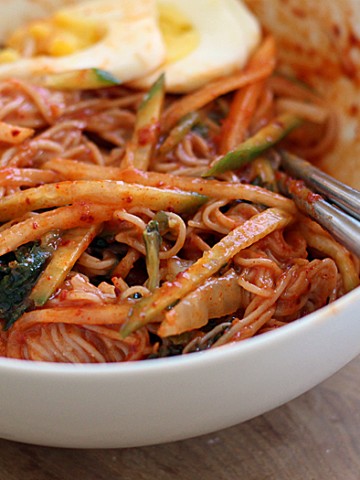
- Bibim Naeng-Myeon, Korean Spicy Buckwheat Noodles
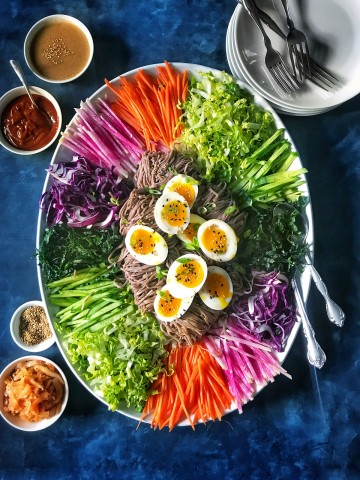
- Spicy Soba Noodle Salad, Jaengban Guksu
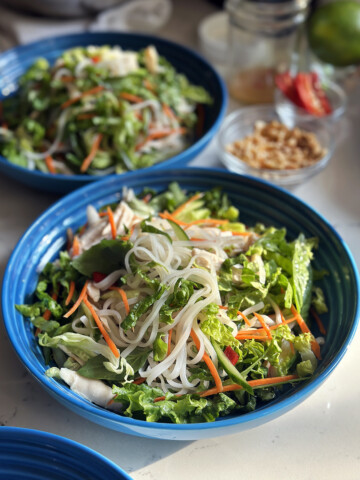
- Vietnamese-style Rice Noodle Salad
- Soba Noodles with Peanut Sauce

Spicy Korean Cold Noodles, aka Bibim Guksu Recipe
Ingredients
for Bibim Guksu
- 12-14 ounces thin somen or buckwheat soba noodles
- 4 Persian cucumbers, julienne
- 2 cups Romaine lettuce, finely shredded
- 2 Eggs, boiled and halved
- 2 tablespoons toasted sesame seeds coarse ground for garnish
- 1 cup Bibim Guksu Sauce recipe follows
- optional vegetables: chopped kimchi, julienne radish, julienne Asian pear or melon
- optional protein: 1 block roasted sesame tofu, 2 cups shredded cooked chicken
Bibim Guksu Sauce
- ¼ cup gochujang
- 2 tablespoons gochugaru
- 2 tablespoons soy sauce
- 2 tablespoons apple cider or rice vinegar
- 1 tablespoon sugar or maple syrup plus more to taste; gochujang has varying levels of sweetness so you may not even need any extra sweetener at all!
- 4 cloves garlic minced
- 1 teaspoon sesame oil
Instructions
Make Bibim Guksu
- Combine all of the Bibim Guksu sauce ingredients in a small bowl or jar and set aside. You can make this up to 5 days in advance.
Make Bibim Guksu
- If you haven't already, prep all the vegetables.
- Cook noodles according to package directions. Depending on the brand, cooking time can vary anywhere from 5 to 10 minutes. Drain cooked noodles and rinse thoroughly with cold water, using your hands to gently stir and squeeze the noodles to remove any residual starch.
- In a large mixing bowl, toss noodle with the sauce until the noodles are evenly coated.
- To serve, divide noodles among individual bowls or plates. Top with cucumber, lettuce, green onions, and optional vegetables if using. Garnish each bowl with about 1½ tablespoons of sesame seeds each.
Notes
Nutrition
Food for Afterthoughts
Bibim Guksu is a perfect example of "Hidden Korean" - Korean food hidden somewhere, most often underneath Japanese. It seems to occur fairly frequently, in subtly different ways. I am sure there are lots of explanations for all of it, that have to do with geo-political history, but I don't watch the History Channel. Korean restaurants that serve straight up soon doo-boo won't call themselves something so Korean. Instead, it's "International Tofu House." Incidentally, I just drove by this space in Westwood, and the new sign over the door reads Oyako or somethingquite Japanese like that. Not sure if it was a complete change in ownership and/or cuisine, or if they have just gone from one Hidden Korean to another - Korean hidden behind "International" to Korean hidden underneath Japanese. Perhaps Japanese food is a greater draw than Korean. Or maybe it was "tofu."
Hidden Korean
Even all along the Sawtelle Alley that's colloquially called Little J-town, there are Koreans hidden under the Japanese front. Mizu 212 is a Japanese shabu-shabu place, but I think the owners are Korean. Up until recently, I didn't know that Asahi Ramen, a decidedly Japanese-looking and -sounding place is also owned by Koreans. The same Koreans opened Tofu-ya just next door, which is basically a soon doo-boo place, but with that "-Ya" attachment, sounds like a Japanese tofu house. There's also Zip Fusion down the street, but they deserve no other words than that the owners and staff are Korean.
I'm not necessarily complaining about the Hidden Korean, because trust me, I could definitely start ranting with "What?! Isn't Korean good enough to serve on its own? Are we that fermented and pungent that we have to perfume ourselves with the more refined *ooh la la* Japanese?!? Stand up and be proud of your damned garlic kimchee!" No, no, it's merely an observation that makes me think about the shape of the dining future. Now that my life in Culver City is over, maybe Miyako is a sign. Maybe I need to explore this as an opportunity to open up a blatantly Korean kitchen on the Westside. Not surreptitiously offering one or two Korean items on a mostly Japanese menu, not calling myself International Tofu House or Tofu-ya, but straight up oh-wee-ent-toe fway-vuh! ;).


Michael says
Going to E3 doesn't make you a dork. It just makes you a geek. Yes, I went this year too. :)
Seriously, the Xbox 360 booth with the huge circular screen was rad...
Jennifer says
*laugh* You had me at liger. Thanks for the giggle!
Anonymous says
Hilarious. You are hilarious. I can't believe you mention "20# bright white copy paper." Who else pays attention to that shit? You have a hilarious case of OCD, my friend.
Anonymous says
Hilarious. You are hilarious. I can't believe you mention "20# bright white copy paper." Who else pays attention to that shit? You have a hilarious case of OCD, my friend.
Anonymous says
You're not alone...I know that our 24 lb. printer paper is 94 brightness.
sarah says
michael: *phew* thank you! i feel so much better being a geek than a dork. ;)
jennifer: glad you got to *chuckle* :)
anonymi: yes, ocd. but printer/copy paper...that's some important stuff. my personal favorite though, is the 67 lb. high bright glossy. *ooooo* LOL!
Cecil Suzuki says
Yeah, Sarah, I've been talking up the "Hidden Koreans" thing to anybody that'll listen. I call it "hermit crabbing."
Like you wrote, Hankook saram _can do_ Japanese.
It's those Chinese that really can really ruin a a bowl of oyako donburi.
Sarah, there are, let's see, six Japanese restaurants in the "media district" section of Burbank, only one is actually run by ethnic Japanese.
The thing is, they're popular as hell!
BTW, man, you be writin' up a storm these past coupla weeks.
hermz says
Don't forget Jose Bernstein's, that Mexican place in Westwood that
does breakfast food (like a deli)... it was bought by Koreans, and now they serve bulgogi + kimchi burritos.